© 2016 G.N. Jacobs

In my on-off relationship to screenwriting as an adjunct to my novels and graphic novels, I keep hearing the same buzzwords that make me sick. Character-driven story is one. A myth and hoax like Donald Trump piously insisting “no racism here,” despite a lifetime of words and policies to the contrary.

Okay, let’s take a moment to let the dust settle from this attack by my moderate anti-Trump politics upon a non-political writing column. Then, I will feed character-driven to the same Great White Sharks of Metaphor that Der Donald-Führer deserves in this election cycle.

The buzzy studio suits that say this stupid and useless phrase in praise of good writing mean to say that they want to read scripts where the protagonist says and does dialogue and action that could only be committed by that individual protagonist. That only Jake Gittes would ever call Evelyn Mulray on her BS assertion that her husband’s affair is okay saying – “Mrs. Mulray, that runs contrary to my experience…”

Don’t get me wrong, great movies and books do have these characters. But, it’s also my contention that nothing about these characters drives the story in the sense of invent the character, let him or her drive around aimlessly and arrive at the story, which is what the unwary rookie writer might interpret the phrase to mean. Character and plot are so intertwined in the average writer’s mind that character-driven used in this sense defines an impossibility.

Yes, character can change the story. Chinatown requires the more beat down version of Phillip Marlowe represented by Jake Gittes. Make enough changes to Jake and the movie’s plot changes. A funny example and thought experiment, throw John McClane into the Great Los Angeles Water War brewing between Hollis Mulray and Noah Cross and see what happens.

John McClane has a closer relationship to the necessary violence of life than Jake Gittes. Thus, the squirmy thug played by director Roman Polanski that cut open Jake’s nose might have lasted exactly thirty seconds doing that to John McClane. And we can expect more verbal snark from John McClane doing this – “Yippee-Kai-Aaaaaay, Motherfucker!” Clearly two different movies sharing the same spine…Die Hard-Town?

But, the uniformed and ignorant studio suit that repeats character-driven somehow thinks that Jake Gittes woke up one day to take the meeting with the fake Mrs. Mulray and Robert Towne somehow followed Jake to the tragic ending. Based on my experiences as a writer, I would have no qualms making the absolutely hyperbolic bet of fingers and other important body parts that Mr. Towne knew the plot first and fit Jake Gittes into that plot later, using that plot as the crucible in which to shape Jake as an indelible character. Before we continue, all body part bets are high order hyperbole. Just sayin’.

In part, I feel confident asserting character-driven is a myth and a hoax because of how we’re trained as screenwriters and novelists. Nearly all of our instructional books involve structure, the outline that says A, B and C must happen because the story always relates to a classic story with a similar skeleton. If your manuals constantly say words like story beats, act turns, Three Act Structure and inciting incident, no one actually with his or her hands on the keyboard drives the story with their awesome character. And I come to this as someone getting the Cliffs Notes version of these books because writing manuals are hard to read more than a couple chapters at a time.

In Blake Snyder’s recently influential Save the Cat series, we receive the advice to start with the douche sounding Player pitch – “X meets Y with a twist” – before doing anything serious in the writing process. We should sit down to watch Movie X and Movie Y with a $4 note pad open across our knees. We generate an outline of all the beats in the story taking care to modify as needed for the requirements of the twist, setting, theme and/or the characters that quickly follow on after we do this beat sheet. It’s supposedly at this part of the process that questions like “is Jake Gittes gay?” or “how fun would an all-female Gostbusters lineup be?” should be asked.

The Cat books get talked about so much as a recent Bible for screenwriting by the same suits that say character-driven too much that I have to bust this syllogism of fundamental illogic. Beat sheet and character-driven become mutually exclusive concepts.

Similarly, we have Syd Field and his older works that Mr. Snyder acknowledged as inspiration. It was almost like Mr. Snyder emulated Shakespeare’s Marc Anthony – “I come not in praise of Caesar…” – just without the biting sarcasm in acknowledging Mr. Field’s work. So that means that a script with Snyder’s beats is not mutually exclusive with Field’s act turns, inciting incidents, Three Acts and the like. The point for this essay, many of our training manuals assume structure first, character second. And for people like me that write first and outline second, it doesn’t matter when you do this work.

At the moment, please take my understanding of these books with salt. Books on storytelling are hard for me to read. Snyder, Field, Robert McKee and Joseph Campbell are project reads and while I have easily grasped the Cliff Notes versions, I do at some point do have belly up and fully read the pig. My observation about these books is that they fail precisely at the level of teaching character. Too many platitudes about compelling characters get bandied about without instructing us what that means. Of course, compelling character is harder to come by than compelling plot. And character is more subjective than plot.

Plenty of bad stories follow the beats to the letter but nothing about the character leaps off the page. Character is important, but it never drives the story. At best, the creation of both is largely simultaneous. That you can’t think up a character without answering plot-based questions like “what story is this guy best for?” or “what one moment in this character’s arc most defines the story?” And the question for the structure-only people should be “what character is most likely to believable commit the acts and words contained in this plot?” A frustrating chicken and egg problem.

In my first novel, Blood & Ink, I needed a young woman because vampires hunt young women. But, I knew the easiest character to write would be me, a forty-year-old dude at the time. Anna Victor resulted from the push/pull of making me twenty years younger and a hot chick cut from the Diana Prince mold (Please save the dime store psychology. Been there, done that.). But, at nearly the same time I have this recurring mental image of Anna standing near her desk with the evil boss vampire about to force her to decide between Queen of the Undead or stabbing the assclown with a Dixon-Tico wooden pencil.

This moment in the book is a plot heavy moment, the climax. In fact, if I could draw it would’ve been my cover. But, it is also the character moment that defines Anna and the whole novel. Knowing ahead of time that everything must lead to this moment meant I then knew what I as the inspiration for Anna could and couldn’t do with all the earlier plot points that I didn’t know.

You see, while it might be true that real people proceed aimlessly through their life stories with only vague notions of what we want, fictional characters don’t. Anna has all of my bad qualities as well as my strengths (such as they are), such as the more dramatically convenient of ADHD or Executive Function Disorder (aka I Don’t Give a Damn Disease). Without knowing that I/She has to step back and stick a sex harassing vampire boss in the ribs, either a different book results or Anna Victor gains twenty pounds from spending too many nights underwear naked in front of the TV watching Babylon 5, yet again. No actual dead vampires in that case.

Writers, especially screenwriters, have zero control over buzzwords spoken by suits, especially non-writing suits. It matters that you understand that character-driven is a myth and a hoax.
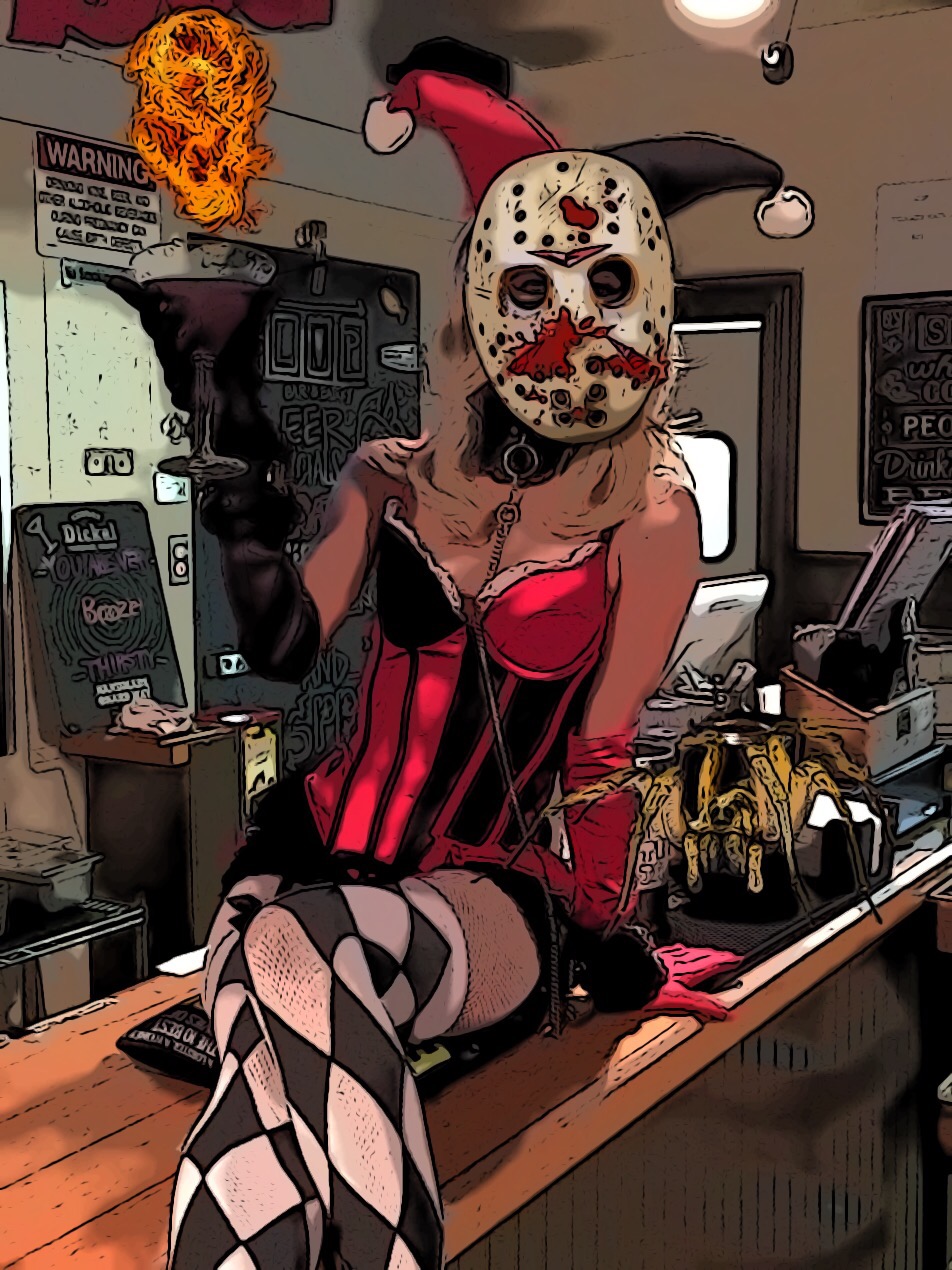
Speaking of Ms. Harley, we ran into each other at a bar. She told a funny story about dating Jason Vorhees, which has sadly been lost to the alcohol haze. She did regret not having any pictures from that time…

Analyst: G.N. Jacobs © 2016

Title: Dead Witch Walking

Written by: Kim Harrison

Format: Book____X Screenplay_____ Play_____ Article_____ Movie_____ Verbal Pitch_____ Short Story_________________

Grade:   Recommend_____ Maybe/Rewrite____X Pass_____

Logline: A young witch/bounty hunter frustrated with working for the magical creatures police quits en masse in the company of a living vampire. In order to survive through the week amid death threats from her former employer, she begins investigating one of Cincinnati’s most elite citizens for a variety of crimes, including illegal biotechnology.

Summary:

Rachel Morgan has been on a losing streak with assigned cases for the Inderland Security agency that frankly a kindergartener should pull off blindfolded. Tonight, that means waiting out a leprechaun on a completely boring tax matter in a bar somewhere deep in the Northern Kentucky suburbs of Cincinnati, known locally as the Hollows. Curiously or fortuitously, someone from the office happens to be sitting at the bar, three seats down: Ivy Tamwood.

The events of the evening, though successful, induce Rachel to turn in her badge, essentially breaking an ironclad blood oath contract to the Inderland Security agency. Considering that her supervisor prefers she leave, the actual risk of assassins seems low…until Ivy Tamwood, a living vampire, joins her new friend in the walkout.

Rachel, Ivy and Jenks, a pixie, move into an abandoned church deep in the Hollows suburb, where Cincinnati’s supernatural creatures cluster together. The church seems perfect for an enterprising witch out to start making money as a bounty hunter and witch enforcing the separation between humans and Inderlanders, the slang for supernatural creatures. Yes, the church may have bodies in the yard, but there is a witch’s garden there too, made more potent for the old bodies.

Thus begins a week and a half of various assassins sent by the I.S. trying to kill Rachel. Her things have been cursed to kill her. Faeries shoot splat balls across the wall intercepted by Jenks and his many pixie children. It seems that everyone in the greater Cincinnati area has a bet on how long Rachel might last.

Rachel shakes off the rust of her witch skills mixing ingredients from the garden to rebuild her standard charms that she can’t use due to the I.S. cursing her possessions. In the meantime, she also has to figure out Ivy Tamwood’s intent and needs as a vampiric roommate leading to being given a dating book to avoid certain behaviors. Rachel decides to investigate Trent Kalamack, Cincinnati’s richest citizen because of longstanding suspicions that the wealthy man might be backing production, distribution and sale of the drug Brimstone.

On two occasions, Rachel drinks a transmutation potion turning her into a mink in order to sneak into the Kalamack estate for evidence. The second time she is captured and cruelly tossed into illegal rat fights. A rat with whom she fought also turns out to be a magically transformed person and they plot their escape.

Rachel brings her evidence of Trent Kalamack’s involvement with bio drugs, outlawed since a DNA experiment resulted in deadly tomatoes, to the Federal Inderlander Bureau, a human-run rival police agency to Inderlander Security. A corrupt officer at Inderlander Security is arrested during the big raid and offers to testify against Trent Kalamack, only to be killed during a prisoner transfer.

With FIB backing, Rachel earns her freedom from the I.S. assassins, but Trent Kalamack goes free…

Evaluation:

I see the Rachel Morgan/Hollows Series as a TV show, mostly because the dramatic problem of trying to distract assassins by providing something else of greater value seems like a TV pilot problem, not something on which to hang $200,000,000 movie budgets. With 12 other books to read, the wealth of material also suggests some kind of TV show in the style of The Dresden Files.

As a read, I did root for Rachel Morgan, but I found myself more interested in the world building where Dr. Watson and company’s pioneering work on DNA led to a virus attaching to tomatoes (Yes, we’ve all seem ‘Attack of the Killer Tomatoes’) that killed enough humans to allow the supernatural creatures to appear openly after centuries in hiding.

Like any flawed dude, I found the implied almost pornography between Rachel and Ivy as the ladies learn the necessary boundaries between vampires and everybody else fascinating at the level of pornography. A part of me didn’t want the cliché pullback at the last minute, as figuring out how the ladies get along after a good supernatural lesbian screw might have been more interesting to read.

As you may see reading between the lines in the above paragraphs, I changed my initial opinion from Recommend this as the pilot of a TV show to Maybe this is a pilot. In part, this is because I’m spending too much time talking about the world in which Rachel Morgan moves than about Rachel herself. Learning about how her Earth witchcraft, demonology and other supernatural magic works ultimately proved more enlightening than Rachel Morgan’s need to feed the police a really bad person to get free of the bad feelings caused by her walkout with Ivy.

I think my ambivalence for Rachel comes from the essential truth that it seems absolutely crazy that she would choose to pick a fight with Trent Kalamack in order to throw him under the bus in her place. Mr. Kalamack at the time of her decision hadn’t, to paraphrase the late Muhammad Ali, called Rachel the witch equivalent of the N-Word. He hadn’t killed or mistreated a sister nor other family member. He hadn’t stiffed her for alimony nor squished her favorite cat under his limousine.

This leads reasonable people to question characters who without any kind of police authority decide to go after big fish like the being ensconced in the center of Cincinnati’s society and business circles. In the real world, we like to talk big about resisting various extremely wealthy people, but beyond a reflexive vote against their positions come election time, we tend to think along the lines of ‘I don’t bother them, they don’t bother me.’

I’m pretty sure that this is a backhanded way of suggesting that Rachel Morgan had other targets in her quest for freedom from the contract put out on her by Inderland Security. She could go after the supervisor that wants her killed. Surely, this guy has the kind of skeletons that can lead to a scene of blackmail poker where she doles out what she’s learned bit by bit to twist the knife for the benefit of the reader? This hypothetical revised plot might save Trent Kalamack as the surprise villain at the end, as well.

Regardless of the slight weakness of Trent Kalamack’s structural relationship to Rachel Morgan, I did find him to be a well drawn villain with an appropriate level of cruelty that he drove the scenes in which he appeared. His matter of fact demeanor while he has Rachel as a mink in a cage on his desk hyped up my interest in seeing Rachel figure out how to escape. Wow!

For the purposes of the series, Trent Kalamack with his wealth, power and bruised ego from almost getting arrested at Rachel’s behest very clearly fills the function of a Blofeld or a Moriarty: the recurring villain sure to come back. The pixie, Jenks, can’t sniff out if the man is human, Inderlander or something else, surely a setup for a big reveal in a later book. It’s a pity that we’re introduced to him by means of a heroine that just seemingly randomly picks an evil rich billionaire to investigate rather than go out seeking justice through other means.

I suppose the real question about Rachel Morgan is whether enough exists on the page to risk green lighting a series based on her adventures. I do think the right TV writer will look at this book and next few in the series and will find the hooks to make her interesting for TV. Let’s see, her father, also an operative for Inderlander Security, died under suspicious circumstances. She hangs out with vampires in a Northern Kentucky ghetto for supernatural creatures. Luckily, there are more stories to read to see how the series picks up over time.

To recap, I MIGHT wish to see Rachel Morgan on the small screen if the TV writer attached does a really good job giving this woman a better reason to do things. MAYBE/REWRITE.

© 2016 G.N. Jacobs

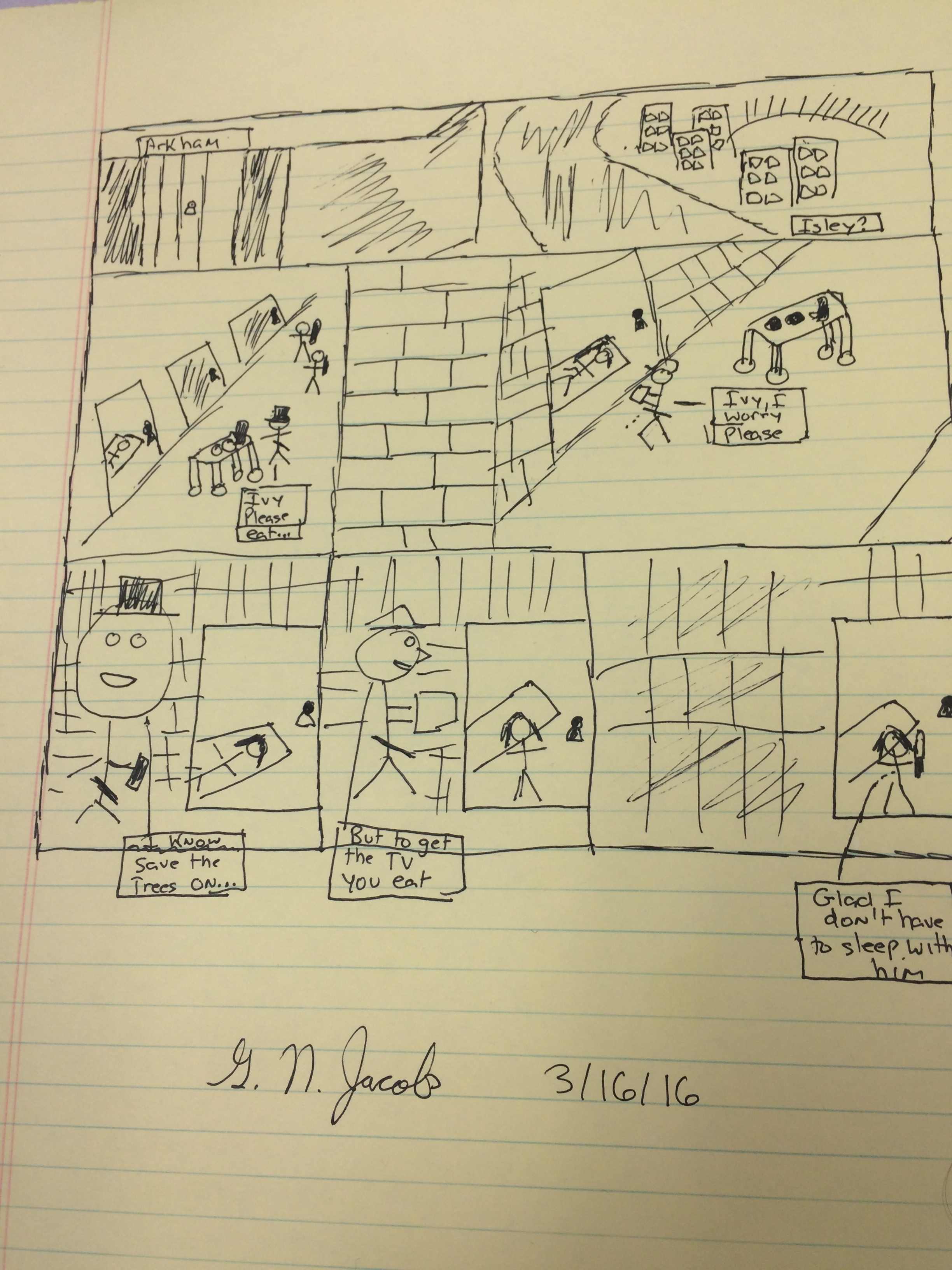
Once upon a time, Poison Ivy waited out her next escape from Arkham Asylum. She manipulated a guard with her feminine wiles. Fifteen years later, a page of that story became the basis of a thumbnail exercise undertaken between writing a few pages of a story about cars that eat other cars. Poison Ivy has a wicked shiv in the last panel. Comments have been appropriately positive in the sense of earning a participation trophy.

A thumbnail is a preliminary sketch of the events in a panel to help the artist draw the book. More later…

2016-03-16 20.27.02

Analyst: G.N. Jacobs © 2016

Title: Dragonflight

Written by: Anne McCaffrey

Format: Book____X Screenplay_____ Play_____ Article_____ Movie_____ Verbal Pitch_____ Short Story_________________

Grade:   Recommend___X Maybe/Rewrite_____ Pass_____

Logline: A young woman survives the murder of her family and uses her strong telepathy skills to plot revenge using an influential dragon rider as her tool; when she succeeds she is invited to vie for the position of rider upon the soon to hatch dragon queen.

Summary:

The book begins with an expository prologue about how and why the human colonists of Pern have formed an imperfect symbiosis with the telepathic dragons found on the planet. Dragons exist to play a version of Missile Command where guided by their human riders they use their fire to burn the dreaded Thread, extra-planetary ribbons of life killing spores. The Threadfall occurs on predictable cycles based on the orbital mechanics of the star system, in some centuries this occurs every few decades followed by long intervals that can last up to four hundred years. It is the end of a long interval and the people of Pern have forgotten why they need dragons and their riders. The Lords of the various defensible settlements have begun to resent the tithing established by long custom that supports dragons and the riders. Worse they have begun to conquer other settlements despite long tradition against warfare…

Lessa of Ruatha, a recently conquered settlement in the High Reaches section of Pern, resists the conqueror Fax. She uses her considerable telepathy to hide as a kitchen drudge and disrupt the economic output of her city to drive out the invader. She largely succeeds for several years getting Fax to replace several city managers in a style of which the Queen of Hearts would approve – “Off with their heads!”

Into this brewing storm, F’lar and the six other bonded dragon-rider pairs in his command fly into Fax’s territory. The dragon men search for special women who might have the talent to ride the as yet unhatched dragon queen, the only reproductive female dragon in a dragon lair. F’Lar senses a lot of unrestrained power in the Hold of Ruatha. Lessa uses her arts to set in motion a duel between F’lar. However, Fax has included in his entourage his pregnant wife, Lady Gemma. The birth of Fax’s son occurring simultaneously to F’lar’s successful duel with Fax contrives to send Lessa off to the dragon Weyr to vie with other ladies for the honor of riding Rathom, the unhatched queen egg.

Thus begins an exploration of the telepathic dragon-rider bond as Lessa and Rathom have a soulmate reaction from the minute the dragon queen hatches. The dragons and their riders are few in number after centuries of neglect due to no recent Threadfalls. F’lar takes Lessa to his bed because tradition says that the rider of the bronze dragon that mates the queen takes the Weyrwoman. It is against the backdrop of this fractious relationship that F’lar and Lessa must learn the secrets buried in the ancient records of the dragon riders to marshal enough dragons and riders to defend Pern against the next Threadfall…

Evaluation:

To date, I’ve never had a harder positive “somebody please buy this franchise” commentary to write. Usually, it’s just a matter of gushingly relating the scene or scenes that tipped me over into wanting to see a book become a movie. And the first entry in Anne McCaffrey’s long running Dragonriders of Pern series does have the highly visual moments that someone armed with the sales numbers of quite a few franchises that feature dragons will want to buy. But, if Dragonflight didn’t kick off a well-known franchise that might become the next Game of Thrones I’m not sure I would’ve recommended this book.

The core of the book, apart from the usage of dragons to fly around the skies of Pern and vaporize the dreaded Thread in mid-air (decades before the invention of the Space Invaders, Centipede, Galaxian, Galaga and Missile Command video games), concerns the budding relationship between Lessa and F’lar that due to the telepathic connection between a rider and his or her dragon happens in parallel to the dragons’ mating. The problem (likely to get beaten out of the movie script by the very expensive screenwriter assigned) is that the relationship itself didn’t really grab me the way good cinematic relationships should.

The relationship between the humans fell very quickly into a bare bones pro forma mini Battle of the Sexes where the man tries to keep the woman out of danger and the woman, like Lucy Ricardo, wants her equal time in Ricky’s show. At least when Billy Jean King smeared Bobby Riggs all across the tennis court, there was some halfway interesting tennis to look at (for a few minutes maybe). Yes, Ms. McCaffrey did play fair with why that ingrained sexism might develop in that the Dragonriders only had one queen dragon and you can’t use up the last one in just any battle. But, the writing of this relationship didn’t rise up very well.

Science fiction fans all over who want to see good properties get made into movies are probably warming up the hate mail for my temerity in thinking that a Hugo-winning book is anything less than perfect. But, it’s my opinion that awards in science fiction are more likely given out because of a brilliant concept like dragons and their human riders fly around the skies of a faraway planet preventing ecological disaster from space and that the human relationship in the foreground that could theoretically work against that goal might be overlooked.

However like many books in the amorphous category of In Between, Dragonflight has the seeds of a self-fix, ready when a screenwriter warms up his or her smoking word processor. This becomes very important when looking at the production status of the series (as of 2014 Warner Brothers has the franchise and has paid someone to write the first installment). What follows are my humble suggestions for using what Ms. McCaffrey already has on the page for making the movie great…

One way to distract from a blah relationship in an otherwise winning franchise is to inject external dramatic issues that on the page were hinted at and in one case resolved way too early. My first suggestion in this category: don’t kill off the tyrant conquering settlements too soon.

Killing off the tyrant, Fax, at the turn into the second act instead of having him linger as a possible distraction/hindrance to the drive to unify the various settlements of Pern really seemed like an inefficient use of dramatic story beats. Fax drumming up anti-support against the riders based on the fact that there hasn’t been a Threadfall for an unusually long time (copiously noted as possible in the various astronomical records of Pern) sounds like it could’ve been used to keep me on the edge of my seat. It helps to have a they could fail element to a story.

Fax could also have served to draw out the qualities of F’lar and Lessa well into the late second act. If the heroes have an uninformed ambitious foe that opposes them, imagine the possibilities if, say, F’lar decides to assassinate Fax for being too troublesome. Does F’lar relent from the killing because deep down he doesn’t kill people in cold blood? Does Fax see the light and join the program at the last minute because a Hold Lord doesn’t get to be lord if everybody’s dead?

Either of these solutions would make the otherwise prosaic and boring relationship between F’lar and Lessa seem deeper and more dramatically interesting. Something for the screenwriter to work on (we hope).

Another suggestion might be to simply write a real fractious relationship that matters due to the fact that if F’lar and Lessa can’t work it out, Pern basically dies. In the book, Lessa is aware of F’lar catting around with another of the candidates for being the dragon-queen’s rider. F’lar justifies this based on Lessa being very young and inexperienced can’t articulate her desires that he wishes to be honorable and not impose himself on a woman he cares for deeply.

The solution to this triangle proved brilliant: send the rival off with the very next queen egg to the southern continent to get reinforcements ready when Thread falls again. However, punching up the middle parts of the romantic dilemma with anything, even the cheap theatrics of thrown plates and a lot of yelling might give the reader/viewer the sense of real stakes. I hope the screenwriter sees this in time before real production money is put up in escrow.

Part of why I make these suggestions to bulk up the relationship of the two leads is that this book and franchise shows the pitfall with having a mindless antagonist force. Thread is a fascinating concept. However, once the various characters use their primitive astronomical tools to discover the orbital mechanics governing Threadfall the drama in the book is already over. The reader only stays with the story to see the results of the war preparations. I’m hoping for more when I finally see Dragonflight as a movie.

Otherwise, hack screenwriters will feel tempted to go really far afield to liven up a story with amazing Hugo-winning world building that has a boring story in the foreground. In the hands of these mythical hacks, Thread could be intelligent. Imagine Thread changing tactics in the middle of the bombardment? Or perhaps one of these intoxicated screenwriters might steal from the work of Fred Saberhagen and create a Berserker-style force of evil robots or starfaring aliens who wish to kill off the humans on Pern to facilitate conquest?

Have no fear, I do not actually advocate these last two suggestions. They clearly go into the category of being so far completely outside of what Anne McCaffrey and her continuation author, son Todd McCaffrey, intended for the franchise. I might reject any hate mail for saying that Dragonflight is imperfect because story threads weren’t fully realized on the page, but adding in evil robots would, in this case, be completely indefensible. My earlier suggestions have the virtue of being concepts that are already suggested on the page and just need shaping and sculpting to bring out. A huge difference.

I have always liked to make sure that I highlight something unreservedly good about the property under review. Dragonflight has it in spades what with the CGI visuals of dragons flying around playing Missile Command to save the planet of Pern. It is in those visuals that I recommend this book while expressing my hope that a screenwriter can make the movie be about more than just dragons flying around burning things.

Additionally, I did like the tricksy-tricksy usage of time travel defining the third act that can’t be talked about until after we all see the movie. It’s the ending and I don’t give away endings.

My last suggestion: I’m not sure that I see the franchise as a series of movies, but rather a TV series for HBO or Showtime. I think my go to for any property that has as much narrative built in over a nearly five decade publishing run like Pern is premium TV. However, the story analyst doesn’t always get what he wants.

So to sum up, we have a brilliant concept with a lot of thought given to the supporting science of ecological niches. We have a presently boring relationship that hints at the real drama possible in this future movie if the screenwriter feels brave enough to go there. We also have a view of dragons to provide a good counterpoint to Smaug in The Hobbit. Thus, I will tentatively RECOMMEND this book and the franchise of the Dragonriders of Pern, based on making Lessa and F’lar interesting to watch as a couple.