A screenshot of the mugging in progress…

© 2017 G.N. Jacobs

Siri finally mugged me last night, or rather conspired to get me lost in Burbank…same thing. Bear with me that saucy minx has always gotten me where I’m going and so for me fears of entering a hacker movie where hostile forces send me to hell and back for whatever nefarious purposes most suits the narrative is a new thing that bears comment. Evil Siri with the map is easy to beat…until she isn’t.

I have friends with a pretty good rock band that throw shows in Burbank at Cody’s Viva Cantina, a Mexican place more well known for providing stage space for good local bands that might not ever get off the club circuit (blame your nearest A&R man). Certainly the otherwise good burritos cry out for Tapatio in their blandness and the salsa to go with the chips…never mind, not a food review.

My friends think of Cody’s Viva Cantina as a second home and they arrange three or four shows a year when not touring anywhere that wants to hear an all-female Lynyrd Skynyrd tribute. The big show lands in the middle of December, what with birthdays, bandiversaries and such…all good excuses for cake. So I’ve been a friend of the band for quite some time and, of course, I RSVP on Facebook.

Now, Dear Reader, presumably you’ve paid attention to your news feed about the fires in my fair City of the Angels? Normally, I go through the Sepulveda Pass and I know my way to Riverside Drive near the Los Angeles Equestrian Center and the northeast corner of Griffith Park. I follow the visual cues to find my way there to a venue I’ve been to several times a year for a lot of years now.

But, the news tells me for several days about a brushfire astride my regular route and said news and official sources aren’t staying updated for the weekend. Yes, they saved me much hassle and time for the Wednesday peak of the fire suggesting I’m not going anywhere near the Sepulveda Pass. I need to know if the freeway remains closed on Saturday with 50-percent containment, but official sources aren’t saying hey, the 405 is closed nor do they say hey, the freeway is open. I suppose one lesson here is that official sources saying nothing is the same as saying the freeway is open.

Erring on the side of caution and in the absence of any journalistic reason to see a fire I plan on going the back way around through Downtown. I know my normal way. I know most of the back way (see below about navigating LA), but I need Siri to hold the map for the last leg of the trip where I don’t know the side streets towards the end because I’ve never needed to go this way. And for the first time Siri, bitch that she is, mugged me.

I pack a bunch of odds and ends into the pockets of one of my coats: iPhone battery, cable, battery powered LED light, earbuds, reading glasses, foam ear protectors and a notebook. I usually don’t and won’t need this stuff, but I’m nearly always prepared for a boring stretch with no one to talk to where I whip out a few more words. People comment on this habit of applying the Boy Scout motto to writing all the time. I shrug.

As I get ready to turn my engine over, I know I need music to keep my mind from overthinking and freaking out that thar be traffic, Boy on any high-density route in LA. Due to the specific things about my Bluetooth connection in my car, I switch over from the radio because the iPhone will only interrupt the actual radio for a phone call. I need there to be music between Siri’s “helpful” turn advice tips. I try KUSC’s mobile app, but the classical station hasn’t caught up to the rest of the cool kids that make nice with Bluetooth.

I call up Beethoven’s Symphonies on Spotify and start from the First. Then you tell Apple Maps (Siri with the Map) where you’re going. And here begins the mugging in slow motion as soon as the car pulls into my driveway. I just don’t know it, yet.

Siri with the Map assumes that I since I live on the Westside that my normal route through the Sepulveda Pass is the best way. But, it’s three days after a peak fire day rogered that route and I’m not trusting that the official sources took the day off as a good thing. I head east on the Santa Monica Freeway heading Downtown.

Traffic moves a little slow on a chilly (60-degrees F) night on the road. Beethoven fills the car. I groove to the music. I’m sure there’s a future post on my currently dormant Composer’s Counterpoint column about the ability of Beethoven, or any good music to make the commute fade into that Zen archery place where you feel the music, pay attention to the red lights ahead of you without getting worked up. Maybe, if I can find more than this caveman sentence – “Beethoven good in car! (GRUNT)” – to say on the subject.

The music metaphorically hums and pops as I pull over into the left lane on the Santa Monica Freeway (10-East). I drive with an eye towards already be in the lane you want so it’s the other yahoos making the last minute lane dive across your line of sight (I operate with the belief that dive bombing an off-ramp at the last possible moment increases your at fault-ness when we trade paint). A driving style that really only rewards home field advantage, any other city on the planet I regrettably trust Siri just like all the other tourists.

When going around the back way to Burbank and the northeast corner of Griffith Park, the idea is to pull left onto the Pasadena Freeway (110-North) go past Dodger Stadium and then pull left again after the tunnels onto the Golden State Freeway (5-North). If going to places I know how to find nearby, I don’t even turn on Siri with the Map. I just need her help making the last couple miles, but I’m adding a bit of extra dangerous and stupid if I try to work Siri with the Map while in the car without keeping at least one hand on the wheel.

This meant that I turned her on as soon as I left my house and she cuts into an important point in the Beethoven to tell me things I already know – “take the next right…” Siri with the Map dispels nearly all fears that she will morph into HAL ready to kill the hibernating science team and refuse to open those fucking pod bay doors. Why? She doesn’t even have the flexibility and horse sense to go in through the back door displayed by a five-year-old on a mission to get cookies when Mommy isn’t looking.

The one downside to turning east on the Santa Monica Freeway while slowly getting over to the left to be where you need to be well ahead of time is that Siri is having conniptions trying to get me to turn around and get back onto the 405. She assumes the road is clear. I don’t.

“Take the off-ramp on the right for National…” “Take the off-ramp on the right for Robertson Boulevard…” Good thing I have Beethoven on the box or I might want to hunt down Siri’s voice actress. I’m already paying attention to a van tailgating me even going about sixty-five. And just because I start from the Westside the bitch won’t get it into her digital head that I’m intentionally taking another route.

I approach Downtown. The van gives up tailgating and pulls around to the right. Siri with the Map finally catches up to what I’m doing, but steadfastly wants me to pull right and go completely around Central Los Angeles to catch the 5-North adding even more time to my drive than going around the front way on the 110-North with just enough traffic to notice. Finally, she begins to tell me to stay left and go left again.

Meanwhile, I’m not really getting pissed off. Beethoven is blasting through the Second Symphony by this time. Downtown LA has dressed up with a few extra lights for the season. Yeah, it’s a thing, but only for people safely stopped with cameras.

So far, this ain’t even close to a mugging (hyperbole, I know). Traffic clears up on the Pasadena Freeway and I make the left turn onto the Golden State. Now the bitch goes awry…and I’m too busy with the music and those red lights to notice.

My destination as I remember it has an address on Riverside Boulevard tucked away in an equestrian neighborhood where horses have lanes more physically blocked off than bike lanes. It sits next to the main gate of the Los Angeles Equestrian Center. I know what to look for.

Siri gets really creative sending me two off-ramps past Western Avenue, later described as the one I wanted, all the way the way to Olive and sending me back around back across the 5-North. I follow her instructions to the letter finally I get the – “arrived!” – message. I’m nowhere near where I expect to be looking at a beige faux-adobe structure on the corner with the horse gate next door. I’m in what looks like residential housing.

I’m in Burbank trying to be somewhere at 7pm knowing full well that nothing important will happen before 8pm. I’ve been using mugged with lots of hyperbole here; I’m in no danger. But, nothing stops me from rewriting it this way for the movie with a bloody beating, carjacking and promiscuous gunplay, which I suppose is the tenuous hook I need to put this rant about a potentially spectacular nav app failure into a writing column.

I tap End Route and start over at least twice to get a better reading on my destination. Siri with the Map is telling me to turn around and go the other way, when what I remember of Burbank’s urban geography is that I needed to go more or less straight ahead that the app sent me north and then south back towards Riverside Drive. Basically, Siri with the Map had picked up a shift of half a mile north and didn’t have the goddamn common courtesy to give me a reach around afterwards.

The Beethoven is on the Third “Eroica” and I stop to the curb switch Siri with the Map’s instructions to the Los Angeles Equestrian Center that I know to be right next-door. I follow these instructions and…hold my breath (not really spreading both hyperbole and bull hockey in equal measure here) find my way to the destination. I park in the bowling alley lot across the street only giving up about fifteen minutes to this mugging. All’s well that ends well.

The coda is, of course, I go inside checking to see that it is still in fact a Mexican restaurant willing to host bands. No, they didn’t relocate. I enjoy the party. Somewhere between the second and third beer, my friend gets to ranting about the owners of the establishment.

The old owner had been relegated to minority status and the general partners might want to sell out the business for a project that requires Burbank to rezone the neighborhood. The neighbors NIMBY-ed up and protested. This allowed me to speculate that during this process the owners may have filed some kind of documents to move the business to another nearby location (maybe not, it was a residential street where the bitch said – “arrived!”) and that this confused second address led to navigation results about like how Nazis shot missiles at London, aim for St. Paul’s be happy hitting the Embankment.

There you have it, the first time in my life that a nav app actually fucked me in the ass, or at least tried to. I’ve done this enough predating Siri with the Map going back to the Thomas Guide. Here’s the secret to driving in LA…you always get lost close to your destination. It shows in how we give verbal directions – “Freeway X, freeway or major boulevard Y leading to minor street Z.” It’s the Z that kills you, unless you’re that rare soul always fated to find the exception that proves the rule. If so get away, you’re dangerously unlucky!

It was in this thinking that I only wanted the bitch to tell me about the bit off the closest off-ramp, a total fail all around. But, now I have the life experience to fake my way through the existential nightmare of Siri with the Map intentionally leading the unwary astray. It’s a writing column, after all.
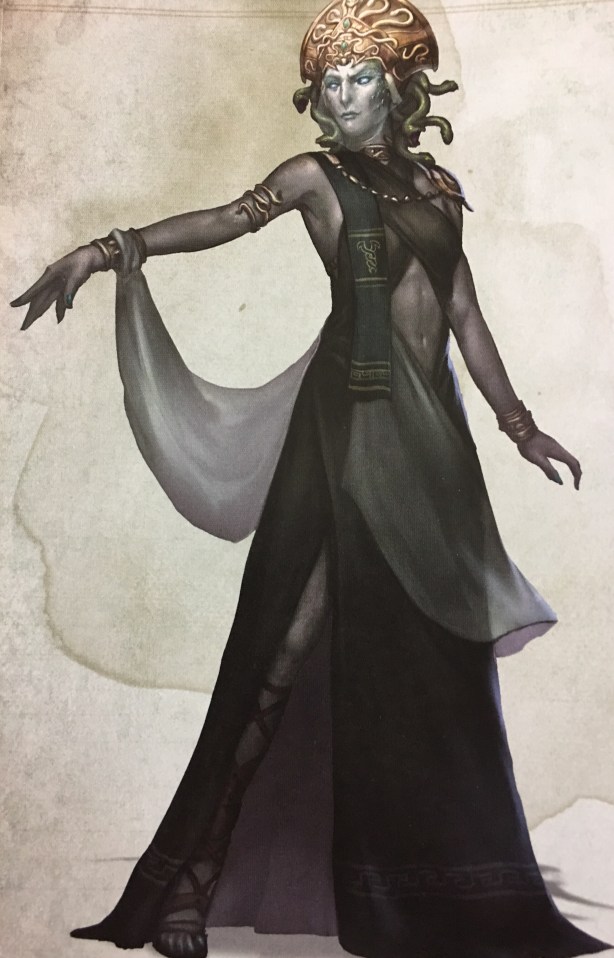
Is it a medusa or a sirdusa with nothing left to lose?

© 2017 G.N. Jacobs

If you’ve been listening, Dear Reader, you know I’ve casually dropped a siren-medusa hybrid into the ongoing monster/alien of the week conversation in this column, three times I think. Simple rule, now I have to put the lady (Greco-Roman mythology aside, are sirens and medusas always female?) on paper.

The trick is to blend the usage in a game of two disparate attacks that in the hands of most competent GM/DMs are pretty ripped individually. Sirens and medusas are well recorded in mythology and in every game system’s variant of The Monster Manual. A siren that, depending on the source, sings to lure sailors onto dangerous shoals, put them to sleep or, when really threatened, bleed them out through the ears doesn’t usually need to turn the unwary to stone. Similarly, the medusa doesn’t need to do scales warming up a High C licking her lips at the approach of arrogant sailors tied to the mast so tight we worry about bondage injuries. So now that repeating the name, sirdusa, three times forces him or her onto the page how do we blend the two metaphors in the same beast?

First off, Madam (Monsignor?) Sirdusa is fundamentally the product of the evil cloning ranch situated a mere two hours west into the Rockies from South Park. Or to put it into fantasy RPG specific terms, an evil witch/wizard interrupted the experiments with dragon eggs to squeeze out sirdusa. Each of the monsters that hybridize into the sirdusa represent long-tested metaphors that usually takes a serious hero (Perseus, Odysseus, your fifteenth level master of mayhem) to vanquish. A hybrid might be overkill…or not.

You can follow the logic that solid myth metaphors like sirens and medusas don’t change over time because the level of dramatic threat to the protagonist always represents something that the bitchy dude in the peanut gallery across the fire likes. You have to figure that the fire burns orange, the barbecue aroma from the minotaur steaks hangs in the air and the teller tells of Perseus. If the medusa isn’t scary enough said heckler is going to lay in with both barrels. Trust me, get drunk and try to tell a story…your good friends think it’s a holy mission to heckle.

I imagine the heckling like this…“Hey, why don’t you, like, also throw a siren in here right about when…”

If everybody else around that fire thinks the medusa is ripped enough to drive the moral point of Perseus in dramatically interesting ways, the other listeners will shout down Drunk Dave and the medusa stays in the picture without modification. But, if the medusa somehow comes off as weak cheese to the listeners then there will be a siren dropped into the tale. A later storyteller will frown seeing that there is a siren and medusa in the same point in the narrative and blend the two…the mythological way to the sirdusa that apparently never happened.

So if we can assume that the sirdusa only exists in the minds of people like me who just like moshing around with metaphors that don’t actually need much fixing, then we come full circle to a bored-ass witch/wizard invented the new beast just to see what would happen. As I lead you through this progression I can see some fun uses to a monster that you should neither hear nor see. Now that I think about it, the evil cloning ranch in the Rockies wouldn’t touch sirdusa; a lab that specializes in four buttholes on badgers (comedic genius, but of zero practical utility) should pass on sirdusa. Paging Saruman and his Uruk-hai factory?

Blending these metaphors represents an interesting thought experiment. We have the beautiful and dangerous singer archetype stereotyped as a soprano (or at least a mezzo-soprano) opera diva juxtaposed with the epitome of ugly as curse punishment for vanity. Mostly, we assume that the minute the siren leaves the beach to pay taxes and live like an in-lander, she’ll sing on the stage creating some interesting performances to say the least. But, how does the medusa power also fit into this dangerous narrative of the sirdusa? Very carefully says the joke.

In addition to my speculation about ancient listeners to these myths deciding that sirens are sirens and medusa are medusa and never the twain shall meet, if you pay attention the rules built into each metaphor also conflict that will require careful DM/GM tweaking to make work. No matter how the most recent storyteller massages the medusa myth into modern relevance, the medusa is ALWAYS susceptible to her own curse. Mirrors disappear from her lair. But, the siren, especially the one that auditions for the opera needs a makeup mirror to do up her face to play the campaign equivalent of Tosca or Mimi. Oooh! The metaphors begin to explode trying to occupy the same space at the same time!

My way around this conundrum is to create a kind of emotional progression that includes a modest amount of shape-shifting to hide the snakes in one’s hair. Most of the time the sirdusa might behave more like a siren. He/she sings and prances on the stage allowing a highly developed sense of smell to pick out a worthy victim sitting in the front row. The sirdusa makes eye contact singing directly to Lunch. Upon a failed Wisdom Check, money changes hands with the stage manager to arrange the meeting backstage. The remaining question becomes…serve Lunch with barbecue sauce or green salsa?

The adventure party hired by a mysterious benefactor to clean up the danger at the opera will likely send in a decoy. They think it’s only a siren and come armed for siren: wax, cotton or just a deaf guy. Back in his/her dressing room, the lure song doesn’t work and the beast worries. Then the sleep song doesn’t work. Things escalate to the bleeding ears song.

Here we see the basic point of blending the medusa and siren metaphors. A regular siren at this point should feel a grave fear of death where either she dies or drops to knees to beg for mercy. But, the sirdusa has one last card to play, he/she grows the snakes and now we’re rolling Constitution Checks to save against Stone Gaze. A last frak you upon smart-alecky adventurers who can’t explain about their players’ reading ahead in The Monster Manual.

The DM/GM will, of course, have to rule about the makeup mirror in said dressing room. Perhaps the sirdusa can survive looking in the mirror for the moments it takes to wipe out the adventurers? Perhaps she breaks the mirror during the fight before revealing her medusa heritage? Certainly, he/she is okay with mirrors when in siren mode, or the whole encounter blows up into the stupid zone.

I have other metaphors for the sirdusa. Some will highlight medusa over siren. The stereotypical narrative here says a mousy but still attractive sculptor that sings part-time in the church choir happy to assist others glorifying in song from the top bench. Perhaps she uses her Stone Gaze, especially if the DM/GM rules for the sirdusa being able to reverse the effects at will, either to capture/study motion or food storage in the absence of refrigeration?

Additionally, the sirdusa mentioned above could be given a backstory where he or she has been beat down by mean people angry that he/she sings instead of leaving the beach paying taxes and living like an in-lander. She has come to believe that her voice isn’t good enough and is happy to sing from the top bench where the backup sopranos warble. Another character enters to change this depressed outlook with encouragement, the best clothes he/she will ever wear and an audition for The Flying Dutchman. I don’t recommend this tack; pay attention, the above sentences pitch as The Jazz Singer meets Pretty Woman…a protagonist’s story. Scary, deadly creatures that have stories like this cease to be monsters…putting them beyond the purview of this Monster of the Week post.

Hopefully, you’ve been paying attention to my careful use of pronouns in this post. I’ve written she for siren and medusa, but he/she for the sirdusa. Two thousand five hundred years later, it’s all about providing DM/GMs and writers the cognitive tools to make everything old seem new again putting an individual stamp on things. The sirdusa is a good place to go gender-neutral where Greco-Roman storytellers would feel shock at the liberties taken.

Inside the game mechanics, Monsignor Sirdusa is easy to come by. The assumption that the sirdusa is almost a nuclear weapon monster and wouldn’t arise naturally but for that heckler across the fire easily leads us to some kind of pseudo-magical recombinant DNA explanation. X Chromosome Essence of Siren crossed with X Chromosome Essence of Medusa needs X or Y Chromosome Essence of Unwary Traveler as a catalyst. BOOM! Male sirdusa.

But, it does lead us to a few changes in the dangerous singer metaphor. Does Monsignor Sirdusa sing tenor? Does he sing baritone? Or do we scrap the opera metaphor and go with rock star? We have to ask these questions because leading (or merely significant) male opera parts seem evenly divided between tenors and baritones and rock stars can sing any range as long as going shirtless makes ladies scream. As always, individual mayhem will vary.

And now we come to the remaining afterthought for the sirdusa, game stats. Who wants to ruin an oddball essay about mixing monster metaphors handed down from Antiquity with boring things like hit dice, attack tables and armor class? But, it is officially a post about RPG monsters; I’ll keep it simple. Read both Siren and Medusa in your version of The Monster Manual and do a simple mean averaging on the stats and abilities. And maybe goose him/her up just a little bit on hit dice out of respect to me because now that I’ve gone to the trouble of inventing The Seductive Sirdusa, don’t kill them off too quickly.

As always, your mayhem will vary. Have at it!

© 2017 G.N. Jacobs

You can’t pretend to block out a few words for the benefit of other writers without coming face to face with such helpfully intended writing manuals as Blake Snyder’s Save the Cat. ARRRRRGGGH! This is me giving full vent to the hot and cold love-hate I have for helpfully intended writing manuals.

In a perfect world we would understand what a deceased but successful screenwriter had to say about how to replicate his mainstream Hollywood career and then push all of that sometimes useful information just below the surface into the same place Zen archers go to hit bulls-eyes. At the very least, I would like to have fewer story conversations like this – “In Ben-Hur, him saving the Roman admiral sits squarely on the mid-point…” We can dream.

What Mr. Snyder did well was convey the hard-won experience of two decades of sitting across from a variety of other professionals (with varying degrees of storytelling skills) and try to distill a best practices primer. In this vein, his suggestions may help the writer to understand the constant push-pull between the originality we say we want and the comfort of the familiar justified by sales figures of successful movies. Mister Snyder condenses this conflict into a sentence – “Give me the same thing, only different!”

Interpreting the words on the page, it seems that Mr. Snyder’s point is that the writer can find both the “originality” and familiarity in the same piece by confining the new to a few moments of the story with a twist that goes against expectations created by recent similar movies. The remainder of the structure remains the same subject to an alleged “physics of storytelling” going back to the cave or stone tablets. For instance, the writer will analyze the structure of Star Wars and make the modest changes that get you Harry Potter.

The “originality” may come from how Luke Skywalker and Harry Potter are different despite sharing the same Jungian archetype: fatherless boys that leave home to learn about the power within. And key moments, usually landing squarely on one of Mr. Snyder’s fifteen beats that make up a story’s spine (more later) have been changed between the two versions of the same story. Everything else about these examples in a genre labeled a Golden Fleece (quest) story in Snyder’s analysis will remain the same.

Which leads us to how Save the Cat names genres that have nothing to do with comedy, drama, biography or the words we think are story genres. I hate writing list sentences, so you’ll have to actually read the book for the full list and definitions to understand Golden Fleece versus Superhero or Dude With a Problem and the seven others. These names represent an ancient type of story form that is alleged to be universal and with us since the cave.

The fifteen beat spine presented with the ten genres represent loose instruction how to get from Fade In to Fade Out (the few times I write screenplays I just start with a slug and then end the script…rebel). Mister Snyder presents suggestions for each of these moments or beats using words like “false emotional up or down” to describe the mid-point (very nearly the exact middle of the story and a place for an important scene) intended to lead the writer, reader and view through the emotional rollercoaster of the story. When combined with his ten genres the beat sheet will guide the writer through the scary middle of the story where most of us hit brick walls when answering – “What next?”

Before getting to the beats and genre, Mr. Snyder suggests that the writer should answer – “What is it?” – about his/her story in the form of a logline and may even want to tap people’s arms in public to ask them about your story. Watch their eyes, you’ll know when your pitch hits a boring party and go back to the drawing board. And just so you know, the Player Pitch – “X meets Y in space.” – is not what was meant by a one sentence pitch. It can develop later as a funny shorthand, but the writer needs one, usually compound, sentence that says what the story is.

Even though I have my love-hate with Mr. Snyder’s work, largely I think because a guru’s devotees can ruin any party, I do apply some of his techniques. I woke up one morning with a brilliant idea and four tries later on paper (Mr. Snyder really wants people to solve story problems with $4 notebooks and pens before foisting trouble on everybody else further downstream in the production pipeline), what follows is my logline.

A naïve, engaging and mostly unseen combat cameraman acts as the official record of an investigation into a win-at-all-costs starship captain that uncovers an illegal cloning conspiracy.

So what do you think the Player Pitch for this logline might be? The work in progress pitch is – “An OG Star Trek Planetary Landing episode meets The Caine Mutiny filmed in the style of 84-Charlie Mopic.” Now, if Mr. Snyder were to zombie up to comment on this Player Pitch he might slap me around for not saying Blair Witch Project in the Z slot, where the in space douchery usually goes, to convey that this story is Found Footage.

Mister Snyder asserted quite cheerfully that the writer who absolutely must use a Player Pitch will always name hits – “Ishtar meets Howard the Duck” – being a specific example of the opposite from his book. My problem in this case is that I really HATE Blair Witch and want to convey the military flavor of the story that the more obscure and awesome indie that predates BWP by twelve years or so does. I’ll take a hall pass and tell Zombie Snyder to go eat someone else’s brains thank you very much.

I haven’t gone further with this story because I have so much prose to write and the minute you say Found Footage, it can’t even be written as a comic book. But, I did wait to write until I have my logline. When I do get back to it, I need to watch The Caine Mutiny, A Few Good Men, and Judgment at Nuremburg along with every OG Trek episode cheerfully slaying redshirts. Just to make sure I grok, I will also boot up various Trek courtroom episodes across all the shows. All to make sure I know which beats to steal for my script.

Oh, and I’ll read the books from which these movies might have been adapted something Mr. Snyder didn’t mention. If his storytelling advice applies universally then reading the books will also reveal beats, genre and tone. Use your library card or lose it.

So far, I must sound like a gushing devotee (it’s the followers that ruin the party remember?). Now for the soft mushy parts that Mr. Snyder might not have fully understood still leaves many writers in the dark where they started.

Mostly I want to keep Save the Cat a little further away from novel writing than screenwriting. My process with novels is one where I get the idea and start blasting out words saying things like – “I use the first draft to discover my connection to the characters and plot and will fix it later.” His process delays the timely release of that book and if his suggestions are as universal as claimed then my narrative will naturally find those comfortable beats that define our stories since the cave. Worrying about the fifteen beats upfront just adds a lot of freak out to the process. An editing tool.

Another minor bit of contention with Mr. Snyder’s methodology is that key sections are glossed over with names like Fun and Games. This is a section early in the story in between Stating the Theme and Turn into Two (reading the book will explain these terms better) where the characters move through scenes essentially in between more important beats. It’s just that when you name it Fun and Games, you might give the misapprehension that these scenes don’t matter and can be anything as long as they link the State Theme scene with the Turn into Two (beginning of the Second Act) scene. All scenes matter and should reflect the character of the protagonist.

Speaking of the many structure-heavy writing manuals of which Save the Cat is currently the best selling version, I’ve noticed that the writers may short shrift developing characters. Mister Snyder asserts that part of the logline process includes developing the protagonist (naïve, engaging and mostly unseen combat cameraman) and the antagonist (win-at-all-costs starship captain). But, he doesn’t go much further than what are essentially Jungian archetypes rooted in those adjectives. The cliché going back to Syd Field or further is – “you need compelling characters…” Duh!

This is where I get to recommend an acting class or two for writers. Good actors create compelling characters, even for bit parts, based on the saying that “everyone is the hero of their own narrative.” Whether trained in the Method or the various competing anti-Method techniques an actor will make up a person to play, even for the yeoman silently handing Captain Kirk a clipboard. It seems to me that the writing manual author that incorporates both this ubiquitous structure knowledge and deep dives on what actors actually do will likely deserve being a bestseller.

Now we get to the biggest concern about Save the Cat and the many similar books rooted in two questions.

Does Save the Cat really describe universal narrative themes, structures and meanings?

If it is universal, are there other equally universal dramatic story forms that haven’t surfaced in our consciousness in the same way that might also hold the audience’s interest?

Save the Cat describes a variation of the Hero’s Journey originally named by folklorist Joseph Campbell (recently distilled by Christopher Vogler in The Writer’s Journey). Mister Snyder says nice things about other authors of other structure-heavy manuals. Syd Field is listed as an inspiration and that Mr. Synder used the earlier work as the basis of his fifteen beat structure, so that people moving from On Screenwriting to Save the Cat won’t feel like they’ve been completely and uselessly reeducated. Robert McKee is also listed as someone to listen to (Mr. Snyder says there is a theatricality to Mr. McKee’s seminar that can’t be missed).

But, if you dig deeply enough, you’ll find that among academic folklorists there is backlash against the Hero’s Journey that may wander afield into the nasty politics of the age (Liberal Arts favoring evil Multiculturalism versus sound principles of Western Civilization). Until this debate is resolved either way, hopefully by scholars willing to shift the theory to fit the facts instead of distort the facts to fit the theory, there will always an asterisk next to any book that sells copies according to the Hero’s Journey.

Yes, Hollywood has massive worldwide sales figures from good movies in this narrative style working for the Universal Physics of Storytelling argument. But, Hollywood does crap in that style too. The debate continues.

This matters to the writer because we aren’t folklorists. We tell stories and, after we leave school, we don’t have time to read/see/hear everything. We plow through the things we need to get through our next project. Our protagonist is a cop so we watch/read about other fictional police and maybe ask a few questions of real cops, but not one of us could authoritatively argue for the universality of the underlying story forms. We just want the handy reference book that gets us through the next project.

Mister Snyder comes close with Save the Cat and the several exploitative sequels (posts for another day) in that once we figure out if the Hero’s Journey is universal just because we’re people or whether Hollywood and Mass Market Publishing made it so by drowning out all other story forms, this book does the Hero’s Journey quite well. I’ll repeat the part about needing a deeper dive into what actually makes a character compelling, but I don’t have any reason to not recommend this book to any writer beginning their journey from wannabe to master wordsmith. Just take with salt and please Dear God allow me to get more whiskey before we go off on discussions like – “Obi-Wan Kenobi getting whacked is the All is Lost moment in Star Wars…”

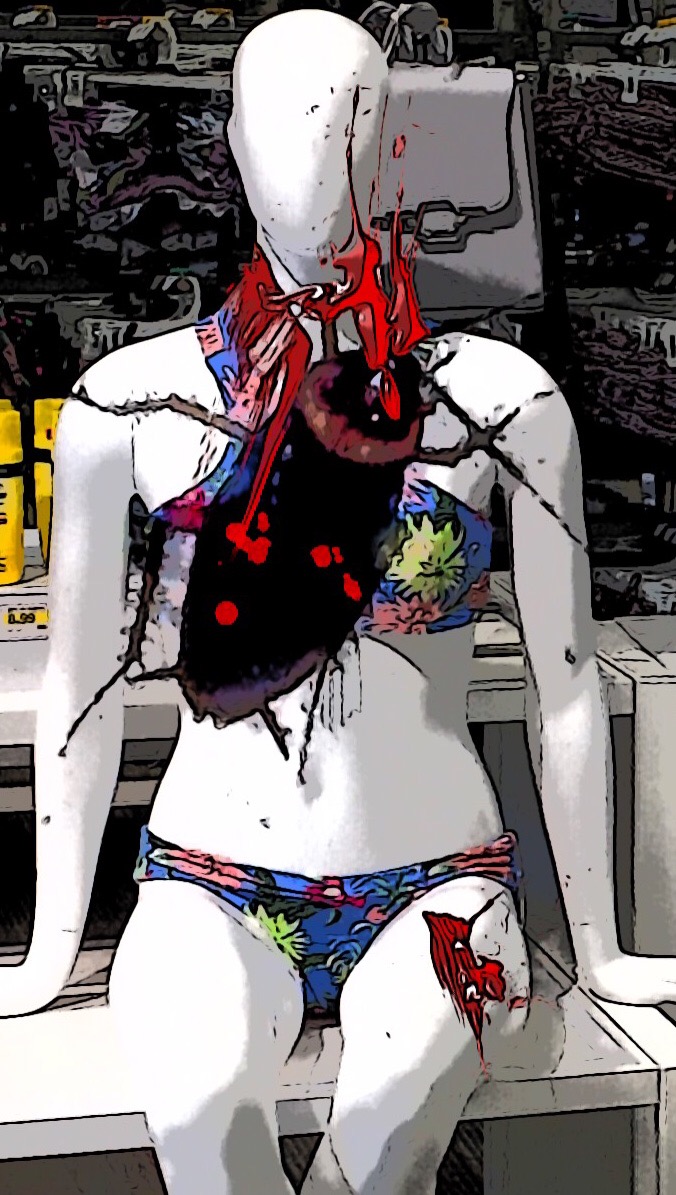
Even the Target mannequins must fear Nosfer-roach…

© 2017 G.N. Jacobs

Nosfer-roach. A vampire cockroach named after Nosferatu. Again, let’s not reinvent the wheel if we don’t have to. Bloodsucking or carnivorous insects aren’t actually all that new in either nature (fleas, mosquitos) or fantasy (Them!) and I’m certain somebody somewhere has stared down a pack of jaded players that has read all the listings in The Monster Manual and just gone – “Fine! What look like six cockroaches about the size of golf bags scuttle out from holes in the walls. Initiative rolls, please. (Dice rolls around table). And those of you that are on the ball notice that these large disgusting insects have fangs much like a vampire or maybe a tarantula and at least two sets of fangs are smeared in wet blood.”

As always the discriminating GM, will have to bend a little imagination to just how the nosfer-roach will interact with players (a.k.a. unsuspecting victims). What follows are my suggestions, blovius and reasoning to support such. Your mayhem will vary.

First question to answer – how intricately linked to vampires is the nosfer-roach species?

I’m pretty sure that the answer will almost uniformly trend towards – “Dude, calling the proposed beast nosfer-anything will automatically put it in the vampire lifecycle in a way that hopefully makes more sense than Alien Xenomorphs, Facehuggers and all fifty stops in between!” Sorry, I can’t resist bashing the Alien Franchise for its massively confusing cinematic pseudo-biology

Yes, the vampire is built into the name. But, from another point of view we do have to ask the question, if only to differentiate how real bloodsuckers and carnivorous bugs do things. Fleas and mosquitos take a little blood leaving behind small doses of the natural anticoagulant that itches like hell ten minutes after they leave. The mommy bug lays her eggs and the blood feeds them. And nothing else untoward happens to the blood donor.

Well, nothing else happens in a First World country with the budget to conduct baited bug traps so scientists can be paid modest sums of money to put dead bugs in a blender and test for the presence of various infectious viral vectors and bacteria. After which the health authorities in said First World country basically send out the helicopters to emulate certain scenes from Apocalypse Now (Wagner opera selections on the PA system optional) armed to the teeth with Malathion. The Third World basically needs to become intimately familiar with whatever naturally occurring bug repellent is known to the local wise man and bug nets…lots of bug nets.

However, nothing about malaria, yellow fever, West Nile and Plague have any symptoms that mimic what the movies teach us about vampires. Certainly no one is known to have come back from these bug born killers as a carrier likely to infect one’s innocent lover. Similarly the merely flesh eating among bugs just eat everything and then march to the next part of forest stripping everything in the army’s path. Again nothing about it says Vampire.

Second question to answer – Once we establish that there has to be a link between nosfer-roach and vampire, did the Vampire Curse arise in large mutated cockroaches first crossing over into humans and other humanoid RPG species, or did a vampire infect the bugs at some later point?

Basically, this is the Chicken and the Egg Question Vampire Style. Either way, the existence of the nosfer-roach exists as a hedge against the Vampire Curse dying out because of a lack of transmission. Why? The traditional post-Dracula narrative assumes that the bloodsucker is someone with a budget that can invite Brides (Grooms?) and other victims in for tea at which time he/she busts out the seduction and hypnotism skills.

However, seduction and hypnotism seem from a purely pseudo-biological point of view a grossly inefficient method of spreading the Curse that we assume acts like a virus. The vampire might receive the gift of magical seduction power upon turning, but magical seduction power is still going to demonstrate a wide range of results among different vampires. Dracula also has the castle, darkly handsome looks and Vlad Tepes’ former budget as the undead Prince of Walachia with which to woo unsuspecting young women. By contrast Dubchak of Dubchak the Polish Vampire (played by the immortal Eddie Deezen) is a dweeb vampire who might not ever win the Bed and Bite contest with any other vampires in the story.

Even if we act like school bullies and shove Dubchak into a locker to improve the field for Dracula, seduction and hypnosis lose much of their potency the minute we contemplate the vampire’s natural enemy, the highly educated hunter…Abraham van Helsing. I’ve never seen a movie with Van Helsing or one of his descendants where the doctor-hunter didn’t come to the party armed with his own hypnosis that cancels out Vlad’s powers. Watch Love at First Bite for the funny version of this hypno-fight.

Seduction and hypnosis methodology continues to break down when we at least pretend to consider the agency of the selected Bride/protagonist. Experience teaches if you live. A selected Bride that rises up to find her inner Wonder Woman would probably laugh at the second vampire in her life.

We assume from getting our biology and pseudo-biology from Wikipedia that viruses and Curses that act like viruses do so to maximize the potential to spread. Therefore whether Dubchak dweebs his way through the dance or Dracula folds her up in his arms to speak sweet nothings in her ear the vampire seduction method can only work some of the time. The pseudo-biology of the Curse wants more surety. Enter the nosfer-roach.

The idea here for the discriminating GM is to create an alternative vector that maximizes the Curse spreading using a beast that lives in filth and attacks by regular old non-seductive ambush and fades back into the shadows. Earlier vampire lore that resulted in the actual silent movie classic Nosferatu assumed just that methodology. He snuck up on you and it was all over but the shouting within seconds.

Nosferatu’s weakness was being an ugly beast sure to inspire fear. When you get to see him coming you have a chance to leave him out in the sun. Giving the Curse an additional vector using disgusting bugs might seem more of the same, but the GM gets to play with how large the roaches are. Smaller bugs than the ones I propose (golf bag size) can hide anywhere and bite more people and even larger bugs still retain much of that ability compared to the ugly beast presented in the classic movie.

Regardless of how the GM chooses to answer my second Chicken or Egg question, here’s how I see the process going. The vampire gets frustrated with his diminishing returns, as the local peasant women become hard targets with mental and physical kung fu and summons his Renfield. Luckily, the wretched soul that aids and abets the vampire typically just loves eating all kinds of insects, roaches among them. Renfield leads his master to the nest whereupon the vampire opens up his wrist and sprinkles blood all over the roach eggs. Presto! The eggs mutate into nosfer-roach growing to whatever size is deemed scariest by the Author/GM. Again, don’t reinvent the wheel.

The weakness of this method in your story is that the open the wrist and drink from the vampire’s blood motif, represents a conscious choice to become a vampire. Nobody that gets bit by a nosfer-roach makes this choice. My own meager imagination fails in this exact spot, but trust me much Author/GM tap-dancing will take place.

To aid the nosfer-roach in its mission to spread the Vampire Curse, I will suggest a few rule changes to vampires to make these vile bastards just a little tougher for your game. I would drop the whole sunlight kills thing (selectively edited out of vampire mythology anyways). I would argue that the insect exoskeleton is made from substances impervious to ultraviolet light. This allows transmission during the day (doesn’t matter that I see roaches at night).

In the nosfer-roach stage only, I would also drop the mirror thing. When contemplating the mirror trick for regular vampires it just goes bye-bye the minute we read the page for Optics on Wikipedia and it’s a dead giveaway. But for the roaches, the mirror trick seems even more of an obvious thing. But, your mayhem and the logic behind it will vary.

Lastly, the Vampire Curse wants to spread so whatever armor class the GM would give the average giant insect, I would add a little more, just because. Tough beasts last longer and are more fun in a game. Again, don’t reinvent the wheel.

The stats I propose for my version of nosfer-roach – SIZE 4-5 feet (golf bag size), HIT DICE 6-8 D8, AC equivalent to a pissed off barbarian in chain mail. Walks during the day, but prefers the dark. Spreads the Curse just through the bite bypassing the whole open wrist thing requiring Constitution saving throws or a Remove Curse Spell. But, of course, your mayhem will vary.

Now we get to my personal why. What is it about the nosfer-roach that fascinates me enough to spend 1,608 words wishing the beast into being with suggestions that GMs may tweak as they see fit? Sometimes I just do gory stuff to justify gory pictures at the top of the post. Your mayhem will vary.

Just another unsuspecting adventure party…

© 2017 G.N. Jacobs

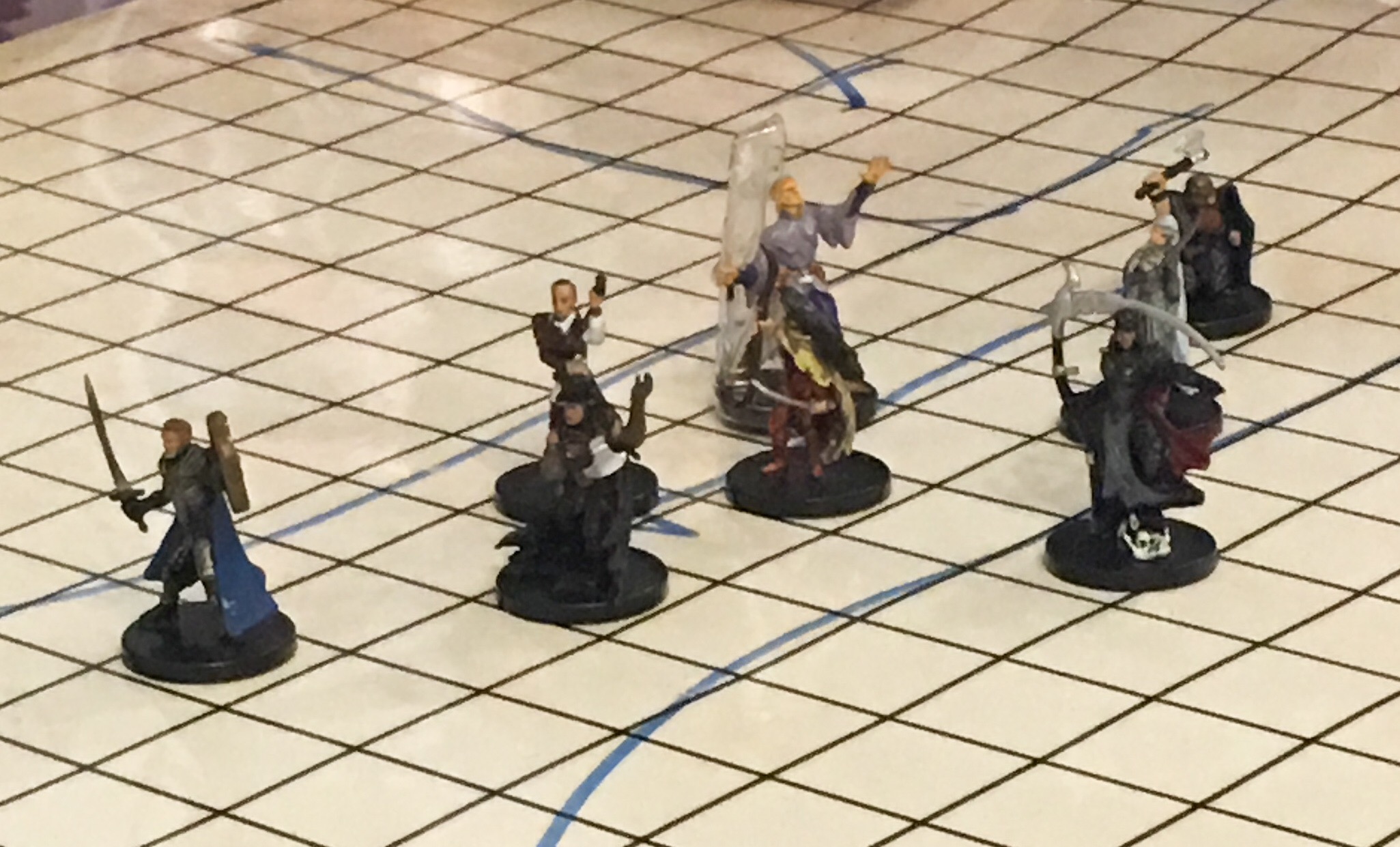
In all my time dungeoneering or whining about not dungeoneering, I’ve noticed several related odd things about play in the traditional fantasy set roleplaying games that are specific to the genre. Most other RPG settings and genres along with fantasy RPG campaigns that allow guns seem to self-select away from these particular tropes, in favor of other clichés to be dissected in other posts. Good GM/DM types will work to avoid these head scratchers and/or a Guns OK fantasy campaign will take care of the rest. Stop me only if I don’t end up describing your last ten fantasy RPG adventures.

A party has just cleared a few rooms in that stereotypical dungeon shown in the illustrations in the rule books: walls made of quarried stone blocks, ten-foot wide corridors and doors made of oak planks banded together with cast iron. The dramatic progression of monsters intent on eating, protecting treasure, burying real and metaphorical hatchets in PC heads or just merely getting in out of the rain has been increasingly violent (the GM/DM has read the same screenwriting manuals as the rest of us). Each battle has made a lot of noise, almost musical noise that seems sure to reverberate through these ancient stone hallways and the party contemplates the next door.

Room One sheltered three orcs armed with Nordic hand axes and probably wasn’t too serious noise wise…maybe C 5 on the piano with all that clanking steel. Room Two probably contained two uber-skeletons (extra hit dice for extra difficulty) skilled enough to make Ray Harryhausen smile from Beyond; this fight might hit B-flat 6 or E-flat in the same octave (an allowance for real gamers do, in strict point of fact, scream. Why we are sometimes banished to the card table in the garage). Room Three might have a half-size ogre where the battle noise alerting the monster in the next room might peak at A-flat 7. And then the cruel, vicious DM sends the party into Room Four with a medusa-siren hybrid and this fight will go off the charts for both volume and high-pitched sound. Basically, I’m guessing this femme monster and/or the swordplay will hit A Over High C, just like the diva singing the lead in the Met’s current production of The Exterminating Angel.

This seems to be a lot of noise bouncing off those stone walls, sure to wake up or alert the next monster in the next room. Yet, invariably when the party approaches that next door (probably the smallest white dragon possible given the hypothetical progression), the party stops at the new door beginning the Door Procedure all over again. Listen. Browbeat the thief to test the lock and look for traps. Enter. Slaughter everything that looks like a monster. Assess results and heal damage, if possible. Bathe in ancient treasure before moving to the next door. A good life that avoids anything remotely like a pseudo-medieval day job.

There are good reasons for this odd rhythm of play in a straight up dungeon clearing adventure. Traps exist to keep the party from getting over confident in the same way that football teams run in order to making passing plays possible. And pausing at the next door can also play into the rules for magic and health recovery allowing the party to make it through to the dungeon’s exit.

And some of these tropes are inevitable, especially when we compare the trade of dungeoneering to the slightly related real world trade of clearing terrorists from bunkers. On the surface, the two careers are indistinguishable…a team enters, all the bad people inside get whacked and the team either then bathes in ancient treasure or they high five that they wiped out terrorists that threatened civilians from the home country. But, we have to look carefully at how anti-terrorism/S.W.A.T. raids are actually different from clearing dungeons to see the fine gradations of my point about how the traditional dungeon clear mission needs a savvy DM to avoid silliness that prevents Suspension of Disbelief.

When Delta Force goes through the door we can assume that the team has the blueprints to the structure before going inside. Even halfway civilized cities make a point of requiring new construction projects to file architect’s drawings with a city department that are either accessible through bribery or are online. This allows the team to build plywood replicas and train repeatedly, or to make a plan that adapts preexisting shoot house training to the new layout.

The adventuring party by contrast happens upon an ancient ruined structure for which no one alive has been inside for generations allowing ghost stories to develop about Dracula’s Castle, up yonder on that hill. Not having the plans has a way of naturally forcing most people to slow down and get the thief to deal with the door. Where the art of dungeoneering can go off the rails is when the inexperienced DM still rolls for Monster Surprise and/or Dragon Found Asleep on the fifth or sixth door in the dungeon, when the noise of all that fighting should wake up everybody between here and the sewers of Minas Tirith.

The one exception to this suggestion would come specifically after a team rest period where the heroes take four hours to get back a few hit points and have the next batch of spells memorized. You can sort of rationalize that monsters, like people, might be lulled back into complacency once they stop hearing scary fight noises for a long enough time. But, many monsters are depicted as having language skills implying a social order, learning and advanced thought suggesting that after the first few doors that the DM simply says, “look guys, you’ve made a lot of noise and the ogre in this room knows you were always coming in for the golden spoon it has treasured since birth causing him to set his ten-foot spear against you.”

Going back to the compare and contrast between dungeoneering and bunker clearing, having the plans and wanting to find Osama bin Laden in the back room has a way of driving the mission to go faster. If a colonel understands that there are twenty rooms to clear with a principal in an upper floor back room and twenty goons as protection, then he or she will block out thirty commandos from the unit.

Four to six will cover with sniper rifles and the rest will form four-man mini-teams each designated to leapfrog hitting doors. A team hits a door. Another team hits the room next door and the first team will move to the next unopened door down the hall. Stealth skills trained into everyone on the team and sound suppressors do have a way of hiding movement until just before entering and shooting all the bad guys in the room.

The adventure party is basically reconnoitering the dungeon going in blind hoping to find monsters to slay and treasure to liberate. The dungeon party is by definition smaller than the anti-terrorism team which means that fewer resources exist to clear out the structure in a quick and timely manner (besides treasure is on the line, expect adventuring parties to behave with the mutual suspicion of The Treasure of the Sierra Madre). When 4-6 instead of 20-30 people go into a resisted interior space with no preconceived notions of saving the pretty Peace Corps volunteer with a gun to her head, the PCs don’t need to be all that rapid. The gold will still be there when we get to that particular door in thirty minutes…or tomorrow.

Hoping to close out the Delta Force comparison, the single most effective way for a DM to control his players’ behavior is the judicious use of booby traps. As said above, using traps serves to keep the party from treating dungeons like Delta Force raids. I have been in campaigns where after a while new rooms went like this… Listen. Test lock. Seek traps. Kick/pry open the door. Toss in the lit flask of magnesium infused oil (the fantasy RPG equivalent of either a flash-bang or an out and out fragmentation grenade). Slaughter everything that survives. I’m sure our DM hated us and just didn’t say it.

And we’ve seen enough modern rescue missions depicted to know that terrorists set up plenty of booby traps. But, there is a difference in the character of said traps that should be noted by the experienced DM in order to preserve Suspension of Disbelief. I’ve noticed that the traps in stereotypical fantasy RPG dungeons have a mechanical ingenuity/Rube Goldberg feel that real world booby traps aren’t likely to have. Basically, the fictional traps feel built by the same builders of the average pharaoh’s tomb with pressure plates in the floor leading to poison darts or an extra tumbler in the lock that has nothing to do with opening the door but might drop the thief into the oubliette on the floor below. Real world booby traps seem to have a character more prosaic, a tripwire leading to a crossbow or shotgun propped up to cover the door.

My thoughts here are rooted in the one area where the thinking of the people inside the dungeon might be identical, or at least should be treated as such by the DM. It seems a rarity that Delta Force will find a room that has both a trap and terrorists inside. Usually, it seems the bad guys will prop up the shotgun to cover the door because they’ve decided to retreat into a more defensible room with more friendlies or they just want to get out and hide among civilians until the next mission. Or they will stand and fight.

One very sound reason for this suggestion for either bad guys in the room or a trap, but not both is that if you set up a trap the mechanism can also work to kill members of the home team instead of the invaders. If the bad guys set up a claymore directional charge before escaping out the back door, those explosives might go off early. Similarly, the crossbow set up behind a dungeon door impedes the ability of the orcs in the room to do normal things, like going to the bathroom or seeking food. This creates a similar suggestion that most traps will be makeshift and defeated by plastering to the wall out of line of sight to the doorway.

And to beat these suggestions home so that they stick, I have heard of extremely devilish real world booby traps, but only after the opposing army evacuated the area and wanted to demolish the port, building or airfield to deny easy use to the advancing enemy. In World War Two, German engineers wired a building so that a GI peeing on a wall flattened the whole structure. I wouldn’t expect this behavior in a contested structure because saving your own guys for the next fight is a priority for nearly everyone.

By contrast, the Rube Goldberg traps favored by pharaonic tomb builders and punchy DMs seem to take on a character of something designed to protect loot many years, decades and centuries after the ancient users of the space have long since gone to dust. True, old and musty dungeons and haunted castles up on the hill are the bread and butter of fantasy RPGs, but the green DM will sometimes put a monster and trap behind the same door without thought leading to this question – “wouldn’t that ogre get hurt tripping the trapdoor into the oubliette the first time he needed to pee?”

Which leads us to another odd thing about inexperienced DM dungeons…a monster in every room. The progression I described above involves four different sentient or semi-sentient monster races all neatly tucked into their rooms in the dungeon that doesn’t consider lessons learned from how humans pack themselves into multi-family housing.

Do orcs like living next to an ogre? Do the skeletons make too much noise rattling their bones for the medusa-siren’s delicate diva sensibilities? And does the white dragon in Room Five imagine the day when the pins in his curse dolls representing his neighbors will pay off with painful deaths bringing peace? And will an invading party of adventurers bring them all together in common cause?

Basically, the DM who haphazardly throws such disparate monster races together would need to invent a backstory of residential politics worthy of shows like Melrose Place to explain why these disparate races that live together in the functional equivalent of a condo HOA association aren’t killing each other. You can argue that certain types of dungeons might exist as a training center for adventurers. A wizard of dubious character makes money throwing would be heroes who pay for the privilege through a trapdoor.

But, then the monsters in that dungeon suddenly have as much reason to escape as the player characters and we should expect the wizard running the dungeon/shoot house to enact certain cruelties upon his monsters to keep them there. For instance, you kick in the door to the medusa-siren-diva’s room and you should expect to find her chained to the wall with a piss bucket. Chained to the wall will almost always bring about pity on the party of the adventurers leading to all kinds of weirdness the DM didn’t plan…like freeing said diva that would otherwise turn them to stone or make their eardrums bleed hitting A Over High C at 150 decibels.

Otherwise, why aren’t the monsters also exploring the dungeon seeking nicer quarters as far away as possible from the smelly ogre in 3A? This suggests that adventure parties should blunder into monsters out and about stretching their legs in the hallways. Inexperienced DMs forget to do this along with other things.

In the interest of saving metaphorical ink, I will close this post letting my amusement at how we actually play fantasy RPGs wash over you with a tease for a later post about how to do sensible dungeons and adventures. A post for another day.