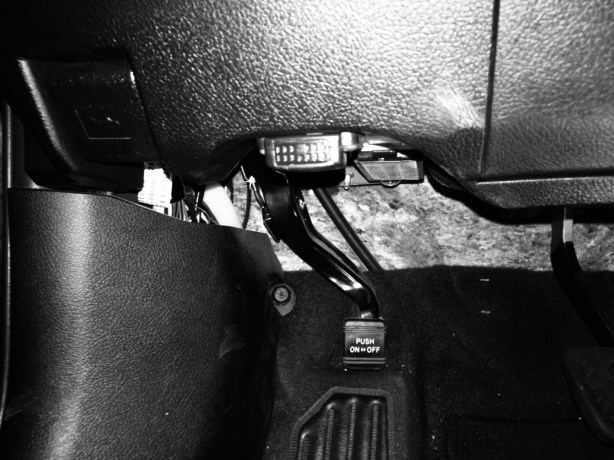
What I assume is the port in question…

© 2018 G.N. Jacobs

“I always find it interesting that pretty much every screenwriter is guilty of Conspiracy.” – Evil Stepfather #2.

Who is Evil Stepfather #2? He has a name, a Wikipedia page and, more importantly, children whom I’m glad I no longer have to call step-siblings that I don’t want back in my life by poking this bear, so Names Change to Protect the Guilty at all times. And as you may guess, I hate quoting something he said during a private conversation about my writing while visiting him at a Central California Club Fed prison, but he did have a point. We do cheerfully commit Conspiracy every day.

Case in point, after a bunch of months just being okay with the two or three Facebook groups that don’t mind me blasting around the links to this blog, I joined about six more groups. When I figure out how each group wants deal with most writers joining up to insure a larger cadre of readers versus maybe I over promoted my blog, I’ll get busy. Until then, there are posts to reply to that thankfully don’t involve the white noise that defines our age. One of which came from the thriller group…

A woman posted that she wanted to have a character kill off the victim by going for the nearly hundred-year-old classic of arranging a crash on a secluded road preferably with a sharp curve. She needed help because her research told her that cutting the brake lines is less of a thing that it used to be. One reply doubled down on the slashed lines suggesting jagged cuts to make it look good after the fact. Another reply suggested bleeding the brakes while providing instructions from Google to achieve the same effect. A third suggested advance knowledge of the route spraying an oil slick and then spraying ice over the slick to delay discovery.

So once you include my reply that’s five people that just got charged with Conspiracy, the original author for asking and the rest for giving an answer. Crap! Don’t get me started on jail! Luckily, as a practical matter for the administration of justice a charge and conviction for Conspiracy (fancy Legal-Speak for sitting in a room and plotting crimes with other criminals) usually, but not always, requires for there to have been a crime committed.

A case in point, the Ed Wood of the 21st Century, Uwe Boll just made a legally indefensible online assertion comparing his movie Rampage to the upcoming Dwayne Johnson action movie of the same title seeking redress in court. Mister Boll’s movie, when you look at the pitch, seems inspired by the earlier 1997 North Hollywood Bank Heist. The Rock movie is completely different.

The point for this post is that if time travel were a thing or if Mr. Boll had produced his movie before the big shootout, then the cops could go after him, in theory. Well, if you don’t also factor in that if you actually make a movie and can demonstrate the only connection between filmmaker and criminal getting ideas from that movie, there’s a First Amendment adjacent argument that the filmmaker didn’t intend to commit any crimes and just made a cool movie, thus is not culpable. Sound legal thinking, until perhaps the Orange One and his goons get ahold of the exceptions for use against writers likely to oppose him (Sorry! The white noise does leak through from time to time).

What are the exceptions? Organized crime figures have been convicted not only of conspiring to do the crimes of the past, but also the crimes of the future. Now those who are more paranoid than I am are already wondering if the Orange One will start sending out minions with orders to create the conditions that change the circumstances of writing a book into making the case for Conspiracy. Put another way, what would happen if Tony Soprano had filmed all of the meetings at the Bada-Bing Strip Club with the intent of cutting this footage into the ultimate mob movie that covers up the conspiracy? Entertaining legal performance art to be sure.

But, ultimately I’m more interested in how I metaphorically committed conspiracy this time around than anything else. You know, give suggestions to help an author drive a car off the road? My reply was this…

The killer has access to the car and uses the data/auxiliary port under the steering wheel to hack the data system.

Mister Jacobs, from where do you get your bloodthirsty ideas? Simple things really, like watching the guy from the Auto Club replace my battery.

My battery died a few days ago. It had lasted exactly as long as the original was warranted to last when the wagon originally rolled off the Toyota production line in Ohio, about three years. I decide to have the guy replace the battery on the spot. The car’s here. I’m here. He and his truck are here. Replace the battery now, don’t waste more of my time.

We chat. Part of the replacement process is that he dives under my steering wheel to hook in a patch from his portable battery to the Aux Port. This is supposed to keep certain settings that are held in the car’s RAM active while he changes out the battery. It didn’t work because I think the battery had been dead a while by the time he got there. You don’t lose the radio settings, the remote locks or the trip odometers, but you do lose the stored engine data. And the clock. Basically, because I haven’t been on the freeway since the replacement, I feel guilty that my MPG average only reflects my city driving.

So when the lady posted her need for murderous assistance, this was in the back of my mind. We don’t look under the steering wheel unless we dropped coins onto the driver side floor mat. I might have been vaguely aware that with all the chips in the engine monitoring system that there would be some kind of port to check things when needed. I hadn’t looked for it until the guy showed me.

I admit to the truth that most days I do a lot of guessing and then focus my research later and came up with this scenario. The killer inserts a flash drive or other similar data card that fits the port uploading the hack into the car. This is based on knowing that all USB ports after the 2.0 type provide both power and data access through the same opening. Thus, I reason out that car manufacturers would do the same thing with these ports. Reason out, not know for a fact that the power port and data port are the same things; again do all research after the first draft to save time.

Then it becomes about choosing which version of the murder by the hacked data system do you like better? Probably, most would go with a GPS hack intending mayhem from sending the victim to the wrong neighborhood. Seems like it leaves a lot to chance.

We’ve already seen TV episodes that assert that a villain can hack the electronics between turning the steering wheel and mashing the brake pedal and the intended results. At the moment, I’m not sure if this emerging trope is even possible because the steering wheel or brakes might be isolated from any other data systems in the car. It looks cool on TV, but until I do my own three minutes of research or see something from either White Rabbit Project or the new Mythbusters on the subject not buying it completely.

What I do know is that the chips in your car monitor the engine and can shut down the car when extreme conditions are met. For instance, if your car detects too much carbon dioxide in the wrong places the car may shut down early to save the engine. Now we’re cookin’ with murder gas, I think.

Use the hack to create fall sensor readings to kill the engine at the wrong time, like, say, directly in front of that tractor-trailer hauling a port container that might be tailgating. That was my plan. And then I got to thinking, that depending on how much mass and kinetic energy the truck brought, the airbag might be a problem.

So now the killer who already has access to the car to install the hack through the port also takes the time to switch out the airbag cartridges for ones that will deploy limp bags so it looks good when the cops look at the wreck, but still put the driver through the windshield. Ooops! I just douched up a sound plan violently executed today with a wrinkle that adds complexity and poor execution tomorrow. No one’s perfect the first time out committing the grievous crime of Conspiracy.

And I haven’t even gotten to the part about the other post where a quick check of the arsenic page on Wikipedia helps another author figure out the historical availability of the classic poison…two counts now.

Praise! A victorious day! For tomorrow is not promised!

© 2018 G.N. Jacobs

Excerpted from the journals of Stephor the Seeker:

“Everybody run!” I had shouted pointing to the table where the victor would soon raise her spoon against the traditional meal.

I suppose I should backtrack a bit, I do so love my in media res openings. In my travels seeking to unite my compass with what I believed sure was now named the Necklace of Theongrave, I had occasion to visit Britain, the part called England, during a particularly warm spring only to blunder into the tennis at Wimbledon. Largely because I haven’t permission to open my mouth about a lady, I will skip over the part where I met, romanced and ultimately parted with one of the female contenders, later crowned Queen and Champion of Centre Court. And she must remain safely anonymous. If it matters, we cried at the leaving.

Anyway, I digress. The lady in question is surprisingly relevant to what happened next and will thus be alluded to anonymously. As part of her competition ritual, the lady prefers to watch movies with quite a bit of cartoonish gore the night before a big match. On this particular night, the she insisted on Attack of the Killer Tomatoes. We laughed and the other things as you might guess. I hummed the immensely catchy theme song, but not the intentionally horrible Tomato Death Song, as I made my morning grooming ritual watching her sleep contentedly in the warm morning light.

She played her match practically giving the truth to the playground boast about still winning with both hands tied behind her back. And then, holding silver platter aloft and saying the required platitudes about gratitude and sportsmanship all champions give someone mentioned the strawberries and cream traditionally fed to the victor. My Lady Nettia of Racquet produced the pearl white smile that had hooked me a week earlier during the bracket competition. She may have been hoping for a picture to entice strawberry growers to give an endorsement. In fairness, strawberries are good in of themselves, especially when you chew and hear them scream, but I’m getting about fifteen minutes ahead of the main narrative.

My Lady allowed herself to be pulled towards the bowl. Cameras flashed. She raised her spoon saluting a fallen foe. And now we rejoin the narrative with me shouting my warning. Of course, this was a moment before anything happened so the crowds, reporters and the male contenders waiting their later turn at championship with victor’s strawberries and cream all looked at me as if I dropped my pants to reveal a happy face painted down there. I sometimes am able to feel nasty turns in the local magic or technology (to the extent these may be the same thing) and I gave warning.

A few seconds later, the two hundred or so strawberries held in the crisper for the champions emerged taking a hovering flight of the kind that violates physical law unless magic is part of the equation. Even I screamed like a small child allowed to stay up eating sugar and to watch the more terrifying horror movies in Earth’s oeuvre, like, say, The Exorcist…

Editor’s Note:

It is at this point, that I will cut into Stephor’s narrative about the apparently covered up Wimbledon Carnivorous Strawberry Attack of 2018, even as gory as the story gets with a tennis crowd fighting off the strawberries with tennis racquets, cream and peanut butter what with fingers getting bit off and such. And so for those of us living in a more mundane world where a roleplaying game blogger goofed around on Facebook referring to a Carnivorous Strawberry in an unrelated post, what are the game stats?

It would seem that these lethal berries are pissed off swarm animals with behavior much like Africanized Honeybees. Presumably, vibrations, sound and pheromone triggers will induce an attack as will a feeling of great threat like, say, close proximity to cream or the more apparently more effective of creamy peanut butter and toast. The strawberries quickly choose leader-berries that they feed first in order to make decisions about tactics instinctively using their levitating-flying abilities to eat perceived threats first.

Since these fruit that bite back start out as regular produce, a DM/GM would be well advised to give each individual a single or two hit points for each. I suggest that each hit point eaten from victims increases the size of the biting strawberry to the tune of three hit points gained. So win the fight early or there is no telling how large they get. And eating the strawberries will regenerate all injuries caused by these bites, even recovering fingers, toes and noses.

As stated above before excision from a longer more boring version of this post, a song or rhyming couplets involving why we eat such things will stun the strawberries. In the pseudo-science rattling around between my ears, mentioning cream is slightly effective but peanut butter really does the trick. Why? You have to crush strawberries to make jam. And, yes, as a roleplaying note, they scream in the most satisfying way when you chew and swallow.

While we’re on the subject of the songs and rhyming poetry about how tasty strawberries are, yeah, I do have to whip up something for Stephor to have recited/sung with feeling to save his lover and the crowd…

Red heart

Pitted with seeds

Sweet tart

Bathing in the white of valorous deeds

Red jam, Red jam

On a smooth field of brown

Toast, between them we slam

Evil sweet goin’ down!

(It’s been a long while).

Now, there are a few things that another DM/GM is perfectly justified tweaking to make these vile beast individual to his/her game and to prevent the phenomenon of players reading ahead in the monster books. First, since I specifically goofed on tennis and Wimbledon a GM/DM does get to vary the mayhem due to the presence of tennis racquets. I merely thought of them as handy objects of blunt force trauma. But, as I toss the Carnivorous Strawberries into the care of others, I won’t get huffy if someone else has a better brain fart that makes for an even more hilarious monster fight. Something about tennis racquets as a help or hindrance could go a long way.

Next, please, Dear God, don’t just confine this one to strawberries. The same magical/supervillain DNA technologies that cause these things are equally applicable to wine or table grapes, apples, tomatoes (direct plagiarism alert), carrots, refried beans or whatever produce is tastiest to eat. For instance, a wine grape swarm will likely snap at Lucy and Ethel’s ankles chasing them away. The varieties of mayhem are endless. And with that I have a bowl of fruit to consume…

© 2018 G.N. Jacobs

If you’ve been paying attention, you might be aware that my common whine about classics that don’t land as well with me is – “it benefits from being first.” Or not, it’s not on me at the moment to do the word archeology on my posts or the other reviews I did before the current format. Usually, I mean it in a slightly negative manner as in…

Last of the Mohicans as a reading experience could have been so much more and, basically, it benefits from being first.”

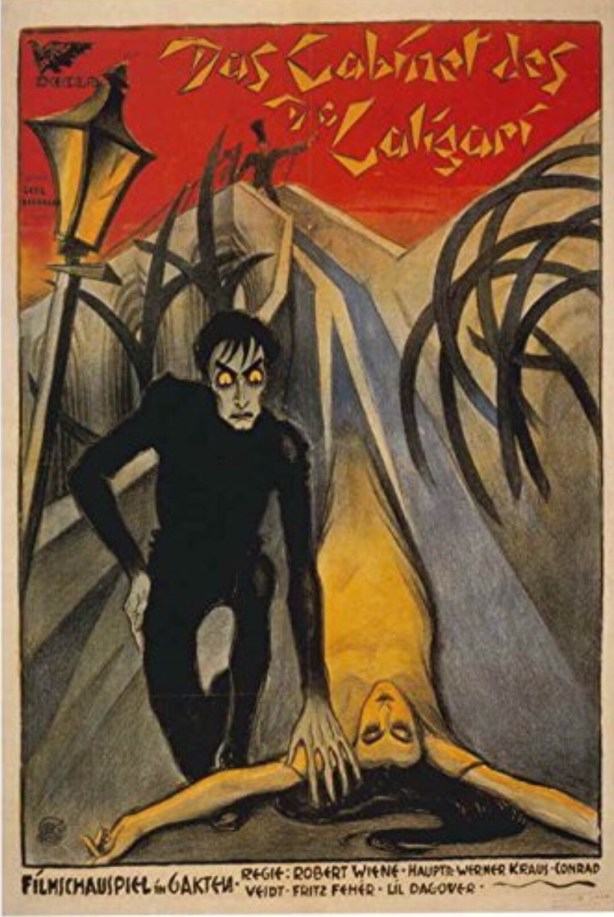
With The Cabinet of Dr. Caligari, a nearly-hundred-year-old silent horror movie, yes, we do get to say the above but not so much from a position of the negative. Rather let’s think about it from the flipside appreciating the ambition that goes into this movie and treat it as a learning experience. For me, the things that didn’t land belly-flopped (but only slightly from the Three-Meter Springboard, not the more painful Thirty-Meter Platform) because I have the benefit of that century of filmmaking in between. And since most film nuts can go Chapter and Verse explaining how Caligari influenced all kinds of movies coming after, we get to see the why of that body of work evolving the way it did – “Dude, we can do so much better once we figure out the film grammar to do that.”

We open on two men on a bench in a garden telling tales of woe how they got there. A crazy lookin’ lady in white with saucer wide eyes wanders through the scene. The younger man, Francis, asserts she is his fiancée and tells their story of woe. Cut to a yellow-lit scene introducing Francis’ very good friend, Alan, and that the fair is coming to town…

Okay, it’s a hundred-year-old early example of German Film Expressionism that tells the story of Francis and Alan, who share a love for Jane (the lady in white). Meanwhile, Dr. Caligari is made to wait a minute or two too long at the city clerk’s office to get a permit to show off his spectacular somnambulist at the fair. At the far, Francis and Alan enter Dr. Caligari’s sideshow tent and Alan makes the mistake of asking the awakened Cesare, the sleepwalker when he might die – “Until the break of day.”

Cesare awakens at Caligari’s command to kill his enemies: the town clerk, Alan and a few others. Francis runs around the town trying to stop the evil doctor and sleepwalker who prove cunning foes what with strategically using a wax dummy that looks like Cesare whenever Caligari might be observed in his rooms. Francis frantically tries to get the authorities to do something, following Caligari to a mental hospital.

Francis thinks that Caligari is hiding out as the unnamed hospital director and finally seems to make the other doctors aware that their boss is a homicidal nutcase to be thrown into an available cell in straightjacket. But, then we do have the wrap around story of Francis and the other man to get back to and…

We discover that Francis is and always was a patient at the hospital and in his delusions decided that the director made a great Caligari. The director who looks normal now feels happy because now he knows how to cure Francis. Curtain, or rather iris to black…

Many things about this movie landed starting with the acting. Uniformly from the old highly emotive and gestural acting style of early silent films (which is not necessarily how you act when you have a microphone on which to fall back) everybody whether Francis (Friedrich Feher), Alan (Hans Heinrich von Twardowski), Jane (Lil Dagover) and especially Director/Dr. Caligari (Werner Kraus) just eats up the scenery with sausage and butter.

This acting intended to trade on the emotional state of nightmares optimized for disturbing rather than outright terrifying works hand in glove with the set design. Utilizing the painted on cardboard set backdrops of most stage plays and favoring the viewer’s choice of off-putting triangles contrasted with the equally disconcerting truth of – “straight lines, what’re they?” – you’ll remember these sets a long time. And you’ll steal everything going forwards, which is exactly why cinema in general and horror movies specifically look the way the way they do 98 years later…

Need to terrify your female lead by having the monster/villain appear at her window on a gloomy night ready to enter? Act Four. At least, they decided to let Jane fight a little instead of going for total damsel in distress.

Need to have the hero unable to convince the local authorities of the problem? Also Act Four. Luckily, Francis was able to convince Dr. Olsen (Jane’s father) to try their hand with the police. Unreliable narrator? Check. Twist ending? Check.

I could go on beating the dead horse that you’ll will have seen many of the concepts, tropes and techniques in all kinds of later films that were started here. Many worked. A few didn’t, but only when seen against the hundred-year gap where the successor filmmakers had audience surveys and their own reactions to the movie from which to work to shoot for improvement.

The most glaring thing about this movie seen in 20/20 hindsight is the handling of the juxtaposition of the wrap around story with the main story that might be a total lie as told by a nutjob. There is absolute clarity that Francis was always a patient and that the story he told is a figment. The director (Werner Kraus made up to look normal and nonthreatening compared to Caligari) is an example of the helpful doctor/caregiver instead of megalomaniac intent on weaponizing his hypnosis puppet (somnambulist as a term was slightly misused), but later filmmakers could and would go further with the twist.

Some later filmmakers would use the last shot of the director to muddy up the clarity by going for a facial expression on the director’s face that evoked the manic state of Caligari. This would create spookiness in the last frame as the audience leaves for their lives. Give the audience a shiver creating the possibility that Francis might not have been a totally delusional unreliable narrator after all. That’s one thread. Have you seen any examples of this movie?

Another thread would be to take the story in the direction that leads to, say, Alfred Hitchcock’s Spellbound where the story that Francis tells has a basis in fact and isn’t completely made up out of whole cloth. The therapist character puts together a puzzle by understanding the symbols. Aside from the example provided, have you seen this movie?

Yet another storytelling thread says that Francis lied through his teeth because he killed Alan for Jane’s hand and made up or enhanced the Director/Caligari to suit his ends. This thread branches again with the choice between said killing drives him crazy or he’s just an unapologetic monster. Have you seen any examples of these movies?

You’ll notice that all of these possibilities require that these filmmakers who hadn’t fully figured out close-ups, or even the ripple dissolve into the flashback somehow pull off film grammar that only came into being because other people watched this movie thinking how do I pull this off better? So in order to make the movie better, I need film knowledge largely inspired by this film.

Basically, this is a time travel paradox that would take all thirteen Doctors sonic screwdrivers at the ready, at least six Companions (eight if you include Amelia Pond and Rory disappearing behind the bushes to make out for no other reason than that they can), a fully charged K-9 and the whole crew of the Shat-Kirk Enterprise doing the warp drive slingshot to solve. A longwinded way of saying that The Cabinet of Dr. Caligari is an amazingly entertaining movie that did what it could and inspired the rest of us to do better. A spooky fun time had by all…

© 2018 G.N. Jacobs

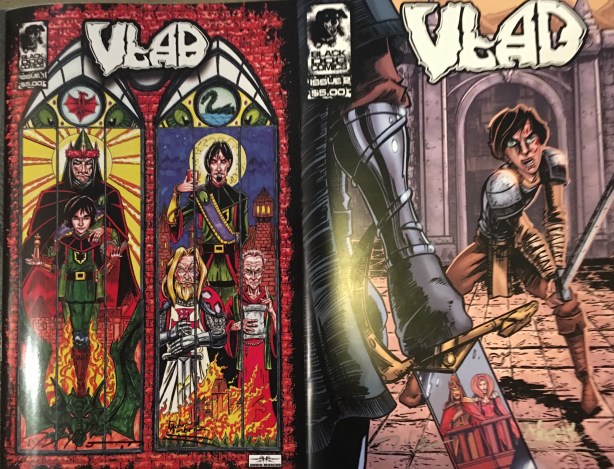
Vlad Dracula, Count Dracula. There are two ways this limited comic book series by my friends, Edward Ambriz and David Moreno, lands. On the historical Count Dracula of Wallachia, thousands of Turks and other undesirables impaled to make a point about invading the sacred homeland. Or on the literary count given to us by Bram Stoker, where after all the copious amounts of impaling and the other forms of brutality depicted in the first version we will see some kind of vampire conversion probably as a last page reveal leading into more stories. And at two issues, there’s no way to guess.

So anyway, we have 44 pages of black and white comics telling us the early life of history’s more colorful tyrants/national heroes (he did keep the Turks out, you’re welcome Europe), who was as famously harsh upon the native-born sinners in Wallachia (part of Romania now) as the Turks. Vlad is the second son (the Spare) jockeying for favor and position from his father, also named Vlad, against his older brother Micea (the Heir, for now). A young lady (sorry, farm girl, lady being used in a more egalitarian sense these days), Elisabetta, has caught young Vlad’s eye and we will see how this plays out in future installments.

So far the reading experience progresses with a lot of intentional slow moving build up toward the inevitable blood bath of practically anyone in Vlad Tepes of Dracula’s way. We see the building brother fight and the senior Vlad’s preference for his namesake due to suspicions that Micea might be in the closet. Daddy regularly slaps both of his sons for the slightest infractions in learning the fine art of war. And the King, the elder Vlad’s older brother has just agreed to foster both of his sons in Constantinople to create peace with the Turks. Young Vlad instantly sees all kinds of angles that perhaps don’t bode well for Vlad’s cousins, the princes. Micea does not.

Reactions to this story will vary according to one’s personal preferences in terms of how fast the writer and artist cut to the chase and have the dynastic struggle play out amid slashed open arteries and the mass impaling to come. I personally teeter between – “shut up, not every story needs to unfold at the breakneck speed of a violent sibling rivalry tale on speed!” – and – “more bloodshed sooner, please!” Though, I do suspect that however these creators choose that more things will happen in Issue #3 regardless of which Dracula story they’ve chosen to tell, because at some point the story will fall off the metaphorical top of the rollercoaster.

Right now, the story gains its most interesting aspects from Vlad’s first person narration in various caption boxes. Clearly old Vlad narrates over young Vlad’s doings how he got that way with a reputation lasting through the centuries since. These text boxes do quite a lot to fill up the story with more foreboding and foreshadowing for the later parts of the story where Vlad will start picking off enemy’s and likely avenge whatever nasty things are in store for Dear Sweet Elisabetta who even now as the pretty face from the kitchen basically has a sign around her neck reading – HOSTAGE WEARING THE RED DRESS FOR THE EVENING.

Another interesting element of this story is a discussion between Vlad the Senior and the head housekeeper who really wants both of the Tepes-Dracula boys to stay off Elisabetta, because she’s good people that needs to find a good husband that will be less likely to make an offer once a royal nephew finishes up. Predictably from what we assume were the attitudes of the time, Daddy practically shrugs acquiescence. And we also learn of his aversion to having a potentially gay son inherit the lands and titles in this scene.

The read breaks down a little bit what with needing to introduce various players to the political drama of Wallachia with title cards as they discuss the apparently unpopular decision of the King to foster his children in Constantinople. Obviously, even without facetiously bringing up the many victims briefly shown in the first issue in a flash forward to the mostly unseen present where the adult Vlad is superimposed over the field of the impaled, we can say there is a cast of thousands. The title cards help as we see hints of the various political forces sure to play a role later.

I ended up having minor quibbles with how Mister Moreno’s art landed on the page in a few places. Specifically, I had to toggle back and forth between Micea and young Vlad on the page. These two boys practically have the same face. Luckily, like the various Peanuts characters, they wear pretty much the same clothes throughout the story. Micea had a neck ruffle and Vlad wore the Tepes-Dracula coat of arms on his chest. But, as time went by how they acted help me tell them apart.

Mister Moreno also did the covers and then brought in a colorist. It’s the same art style, but color really helps the emotional impact of the overall read. Yes, except for the quibble in the above paragraph, I found the black and white art highly atmospheric setting the mood for the dark events to come. It favors the dark inks to go with a story landing in the dark places where the main character becomes known to history as Vlad the Impaler.

As for Mister Ambriz’s writing, allowing for the intentional style to let this story build like a slow cooked stew, I found the scripting to be very workmanlike getting the job done with a minimum of fuss and a maximum of emotional impact. This helped me stay with the story despite what are ultimately minor flaws in the writing. The most glaring of these is that through two issues, so far I’ve found seven typos where I couldn’t help myself and highlighted these mistakes with Post-it notes. Hopefully, there will be more time to send the script to a proofreader before the Issue 3 goes to the letterer.

We have a dark atmosphere with an easy sell when it comes to subject, even if we only get the Historical Dracula. The build up bringing things up to the top of the rollercoaster where the winch grinds the cable just before the release still works for me. As such, I’m still waiting to see what happens in Issue 3 when it finally surfaces. And that’s enough for me.